International Rugby
Bismarck du Plessis and Keith Wood pack down as my dream number 2s
Mark Keohane, in his post 1992 Springboks and World XV #DreamTeam, selects the respective South African and international No 2s who made the biggest impression on him during his rugby writing career.
ALSO READ: MY PICKS AT NUMBER 3
I recently finished writing James Dalton’s life story, ‘Bullet proof’, and it is only appropriate that I start this chapter with Dalton, as he is one of the best to have played hooker for the Springboks since 1992.
Dalton played in 43 Test matches and tasted success 35 times. His 81% success rate is second only to Adrian Garvey (86%) and Morne du Plessis (82%) for Springboks who have played 20 or more Tests.
Dalton’s initial Bok career was remarkable in that he lost just three times in his first 34 Tests between 1995 and 1998. Dalton would make an international comeback in 2002 and play in a Bok team that lost five of nine Tests.
As Dalton told me he experienced the very best of being a Springbok and the very worst.
The highs certainly outweighed the lows and Dalton’s highs included great success against the All Blacks in 1996 and 1998, when the Boks won the Tri Nations Championship.
Dalton and I, as player and rugby reporter, had a love/hate relationship. He’d love to hate me, as he did most rugby writers. By his own admission, he didn’t take kindly to anyone who dared give an opinion on what goes on in the front row if that person wasn’t in the front row.
Dalton, again by his own admission, didn’t relate to any other hookers, be it in the opposition or within his own team.
He held the view that every player in a No 2 jersey other than himself translated into an opponent or, as he would put it, ‘the enemy’.
Many an observer remember Dalton for his red card sending off against Canada in the 1995 World Cup, but there was so much more to his international career and, as a person, his life story made for a writing experience and for fascinating reading.
Dalton lived a life like no other professional rugby player.
Allow me to share the opening of ‘Bulletproof’ with you because it will give you greater insight into the different worlds that Dalton inhabited, and why playing for the Springboks was as much an escape as it was a paid sporting profession.
It reads: ‘As we opened the car door to leave the Gecko Lounge just before 1am I heard a gunshot. What followed was the most haunting of cries: all he could muster was a pained and defeated “Aaaah!”
‘I swung around to see the gunmen, leaning out of the moving BMW, put more bullets into his slumped body. It all lasted no more than 10 seconds but it felt like an eternity from the moment I heard the gunshot, till getting him into the back of the car to rush him to the hospital. He didn’t say anything. He couldn’t say anything. I was powerless to do anything as I watched the colour drain from his face. I can’t remember what I said or was saying. I just wanted him to fight but the bullets had done all the fighting. He was dying while I was watching and by the time that I carried him into the emergency operating theatre his body was lifeless.
‘One of my best friends was dead. He had been assassinated.
‘Carlo Binne was just 26 when he died in my arms in April 2001. It was the second friend I had lost to an assassination after Julio Buscelli was killed in October, 1999.
‘Both were the victims of an orchestrated hit. They often spoke about the possibility of their lives ending in bloodshed. Six months before Carlo’s death, he had been seriously wounded in an assassination attempt outside the Bourbon Street nightclub in Randburg.
‘It was the world both of my friends inhabited. It wasn’t my world but I had enough insight into it to know these things could happen. I just never imagined Carlo being shot in the back within an arm’s length of me.
‘It will forever numb me. Nothing can prepare you to hold a friend as he takes his final breaths.
‘It doesn’t matter the day, the month or the year, it plays out in my mind, over and over. The recall, like the shooting, comes without warning and every time it is as brutal as the moment it happened. And every time I think about it all I can see is the pained and perplexed expression on Carlo’s face.
‘I still mourn Carlo and Julio’s deaths. The emotion will never subside. To me, they were good okes. They were loyal men in a brotherhood of men. They were fearless in the way they lived but they were equally gentle in what they gave to our friendship.
‘I wanted to tell my life story, in part to take ownership of my decisions, and also to set the record straight on the many perceptions about me that are presented as fact.’
Dalton was also fearless in the way he played and his career, in many respects, mirrored his life. There are so many perceptions that don’t equate to the reality of Dalton’s time as a Springbok.
He certainly was a guy you took to war and you could take him into any alley. He’d have a teammate’s back and he’d take it as a given, the teammate would have his back.
Dalton, as a player and person, had – and has – fire in the belly and an intellect that has often been betrayed by moments of madness. He has a wicked sense of humour and over the years he has also warmed to rugby writers like myself and those who wore the No 2 jersey.
There’s a wonderful story of when the Springboks beat Wales 96-13 at Loftus Versfeld in Pretoria in 1998. Dalton started and was subbed with 10 minutes to go. With just a few minutes left, the entire Boks’ substitutes’ bench had been cleared and all but one Welsh player had made it onto the field.
A bemused Dalton turned to the solitary Welsh player still sitting on the bench, glanced at a scoreboard that was close to 90 points and said: ‘How kak must you be that you are still sitting here’.
Dalton’s barbs weren’t exclusive to the opposition. He would mock Bok teammate Naka Drotske that he wore number two because when it came to the Bok hooker pecking order, Drotske would always be number two.
Dalton also told me of him and fellow Transvaal hooker Chris Rossouw’s ongoing battles at practise. It got to the point, said Dalton, that the coach ordered the two of them to take a walk and sort it out. The walk, said Dalton, involved him telling Rossouw that he needed to accept there was only one starting hooker and it wasn’t Rossouw.
Dalton says time has mellowed both players and the two actually had a civilised chat at James Small’s funeral.
‘I reckon we have both grown up,’ said Dalton.
I enjoy Dalton as a character and I loved the way he played rugby and the passion he had for the Bok jersey.
Dalton, in a chapter from ‘Bulletproof’, described his first experience of actually playing the All Blacks in 1996 and he also discussed some of the best hookers he played against internationally.
‘There was a moment when I wondered if I would ever get to play the All Blacks. I had warmed the bench on the Springboks tour to New Zealand in 1994, with coach Ian McIntosh preferring Natal’s John Allan. In 1995 I was suspended when the Springboks won the World Cup final against the All Blacks and in August of 1996, I again found myself on the bench in Durban for the first of the three-Test series against the All Blacks.’
‘Andre Markgraaff, appointed to the Bok job in 1996, was the third Springbok coach I’d play under in three years and, even though I’d gone went through the pre-match ritual and the high of finally fronting the men in black, I’d still not engaged in a scrum, let alone a tackle.’
‘John Allan was Mac’s boy in 1994 and Markgraaff in 1996 initially entrusted John to start in the Tri Nations, but it didn’t yield any different results as the Springboks (with Allan) didn’t win against the All Blacks in three attempts during 1994, or two more in 1996.’
‘Markgraaff favoured bigger hookers who he felt would give the scrum greater presence and strength, but throughout my career I’d prove that a hooker doesn’t have to weigh 110 kilograms to be effective.’
‘I only lost three of my first 37 Tests. One of those three defeats came in the second Test of the 1996 series in South Africa, when the All Blacks beat us 33-26 in the most dramatic of matches. I replaced Henry Tromp with 15 minutes to go and was convinced we could at least draw the match when we attacked ferociously in the final few minutes. The All Blacks had never won a Test series in South Africa and victory at Loftus Versfeld in Pretoria would be history-making for them.’
‘Those final 15 minutes were frantic in that it was all out South African attack. The crowd noise was incredible and it was as if 50 000 spectators, plus the 15 Boks on the field, were pushing for a final converted try that could keep the series alive.’
‘The third and final Test was to be played at Ellis Park and, up until that point historically, the All Blacks had rarely won at Ellis Park. They knew the significance of a ground that had a reputation for spooking them and the manner in which they defended their line at Loftus in those final minutes in of the second Test was as much about making history in Pretoria, as it was about knowing they’d be incapable of winning the series in Johannesburg.’
‘They hung on, history was made and my 15 minutes against the All Blacks was not one of fame, but pain. It hurt to lose and it felt even worse because we had come so close. I wanted to be part of history against the All Blacks, but this was the wrong kind of history. Fortunately, a few years later I would get to experience the right kind of history-making against them.’
‘Playing off the bench at Loftus was my first time fronting All Blacks captain Sean Fitzpatrick and I loved testing myself against the player, who for the best part of a decade, had been regarded as the best hooker in Test rugby. He was also the All Blacks captain and individually it didn’t get bigger for me than playing against Fitzpatrick, with Ireland’s Keith Wood the only hooker in my era who would rival Fitzpatrick’s all-round game.’
‘We lost but I had finally done enough to convince Markgraaff that a hooker with skills, doggedness, mongrel and attitude could do the job, even if he weighed less than 100 kilograms. My 1995 Rugby World Cup final against the All Blacks would come 14 months after the official one when I lined up to face the haka in the third Test of the series at Ellis Park at the end of August, 1996.’
‘The All Blacks picked their strongest side, despite having won the series, but I got a sense they mentally were already on a plane home. They were still tough but they lacked the desperation I had experienced from them in Pretoria, and we had all the desperation after four successive defeats to them in 1996.’
‘The highlight of my international career was always playing the All Blacks. They came with such a reputation and they came with a presence that commands attention. They were like these black knights in armour and the power of the colour was almost invariably matched with the power of their performance. The haka was also thrilling to watch because I saw it as a challenge and an invite to go to battle. Some may view the haka as pre-match entertainment, but I saw it as the start to the match. If you weren’t switched on facing that haka, you’d never get the chance to switch on during the game. You’d take a beating.’
‘I was very proud to be a Springbok standing there and understanding the significance of the cultural war dance. You weren’t just playing an opponent, you were playing legacy, history, culture and then the player.’
‘Fitzpatrick will always be among the most iconic of All Blacks and it gives me great satisfaction when I think of the success that I had against him and the highs we had as a team against the All Blacks, starting with a dominant performance at Ellis Park in 1996.’
‘We won 32-22 after leading 32-8 with only a few minutes to go and I started and finished the game.’
‘The wait had been worth every one of those 465 minutes I warmed the bench against them and Fitzpatrick was as gracious in defeat as he was in your face on the field.’
‘What I enjoyed about him the most as a player was that he could give it and he could take it, whether it was a chirp, a punch or being cleaned out in a ruck. He was intelligent but he was also hard and in the times that I played him we never held back when having a go at each other.’
‘He was also so clever in getting an advantage at the scrum engage. For example, in 1996 and 1997 there was no distance in the scrum engage and it was first come, first set and first go. If you and your pack were ready, you went and the opposition ordinarily had to follow. If you set first it was a decided advantage, but what he would do so often is allow the opposition to set, then retreat and, as you hesitated, he’d move forward with his crotch over your head to mock a mistimed engagement which then forced the referee to pull up the opposing hooker. It was in that moment, as I was being pulled up by the referee, that when he would then engage in tandem with his tighthead prop, who would be slightly in front of him. The two would then hit me at an angle, into the ribs and both would drive me upwards and milk a penalty, or at least plead to the referee for a penalty. None of it would be legal today, but I am sure Fitzpatrick would have found a way to manipulate the scrum and referee it if he was still playing.’
‘Fitzpatrick was a great competitor and he knew how to work the referee. I used to call him a proper alley cat because he always seemed to get away with his shenanigans.’
‘I confess to landing the odd big blow on him and Springboks and Sharks lock Mark Andrews reckons in the Durban Test match in 1998 that he actually saw Fitzpatrick’s lights go out from one of my punches, but I wouldn’t know because he just kept on playing, scrumming and getting from one set phase to another. His lights may have been out but his motor was still running. He was that kind of player.’
‘I genuinely liked playing against him because he may have manipulated referees and pissed off the opposition, but he was never one to bitch and moan about getting hit. Fitzpatrick, like me, accepted that the cuts and bruises came packaged with the position. Both of us were also masters of creating just enough of a gap when we engaged for our locks to land an uppercut on the impact of the engage. It really was old school stuff, but with today’s cameras and television match official replays you don’t find the dark arts being practiced too much. The game really has been cleaned up and when I watch some of the clips from the Springboks battling the All Blacks in the 1990s, many of those Tests in today’s climate would have started with 15 players -a-side and finished ended with 7-a-side.’
‘Fitzpatrick was as technical as he was hard. He was good at engaging late and at an angle, so that he could butt you on the top of your eyelid and cut you quickly, but as I said he was as good at taking it, as he was in giving you one.’
‘He was generous in his praise after we beat the All Blacks at Ellis Park in 1996 and he was from the old school whose rugby students believed that what happened on the field, stayed on the field.
‘Markgraaff was elated after we won and I can’t say he was humble in victory. He boasted that the Springboks should have won the series three-nil, which was taking it a stretch. I think the two teams were very evenly matched and the three-Test series was as close as the World Cup final and the first Tri-Nations Test in Christchurch in 1996. We won by three points in 1995, they won by four points in Christchurch, then by four points in Durban and a converted try in Pretoria. Our 10-point win seemed massive in the context of those results.’
‘I savoured the win, even if the critics tried to down play the significance of the result on the basis of the series having already been decided. As a player, there is no dead-rubber against the All Blacks and also no meaningless victory. It felt good to win against the All Blacks in front of a capacity crowd of 63 000 at Ellis Park crowd and t. The fortress had once again proven a graveyard for the All Blacks.’
Dalton’s off the field demons didn’t allow for a 100-Test career and his best rugby years in 1999, 2000 and 2001 were spent chasing a distorted dream with the Hell’s Angels. He returned to rugby in 2002 and made a stunning return to Test rugby. His individual performances outclassed the team collective and one of his bravest hours was the first 60 minutes in his final Test, against England at Twickenham, in 2002. Dalton fought a lone battle against one of the greatest England packs, but the loneliness of it all prompted another freefall for Dalton.
He would walk away from rugby for good a few months later. He was just 30 years old.
Uli Schmidt preceded Dalton’s Springbok career. Schmidt was a mentor to Dalton and he was a master to anyone who played against him in the 1980s and early 1990s. Schmidt, in his prime, was one of the world’s best in his position and had no equal in South African rugby when it came to an all-round assessment.
He played in an era that included John Allan and Andrew Paterson, who were two very good scrummaging hookers. Paterson will go down as one of the unluckiest players not to have played for the Springboks, even though he was called up to the Bok squad. Paterson, nicknamed the Rhino for his desire to scrum, started his provincial career at Eastern Province and finished it as one of the most capped players for Western Province.
My early years as a rugby writer was spent with Western Province in Cape Town around the likes of Paterson, Keith Andrews, Garry Pagel and Tommy Laubscher. You could have made a movie out of this front row quartet and added Canadian and Springbok centre Christian Stewart to this foursome as the ringmaster of observation, comedy and narration.
Those early 1990 years were gold as a rugby reporter because the game was still amateur and in many respects the players still seemed so real and normal. It was the best of times, to borrow from that oldest of descriptions.
Schmidt, who retired in 1994 because of neck injury, would have made it big in any era. He was sensational and I also got to know him when I was the Springboks Communications Manager and he was the Team Doctor in 2002 and 2003. He was a very clever man and he didn’t suffer fools.
Schmidt, Dalton, Chris Rossouw (who replaced Dalton in the 1995 World Cup squad and started in the winning final against the All Blacks) and Drotske were the primary Bok hookers in the 1990s and, in the first decade of the 2000s, the Boks were blessed with the most talented trio of John Smit, Schalk Brits and Bismarck du Plessis.
Adriaan Strauss would play 66 Tests and captain the Springboks in his last few years, but I always felt his best displays came in Super Rugby. His was an uninspiring Springbok captain and I wouldn’t rate him in the top five starting Bok hookers of his generation. He could add impetus from the bench but better hookers played less Tests for South Africa, one of them being Sharks and former Western Province hooker Mornay Visser. He got just the one Test in 1995 before the Rugby World Cup squad and his pedigree was good enough for several more.
Players like Charl Marais and Danie Coetzee had brief and good spells, but if I think of the early to mid-2000s, then I think only of Smit, who finished with a 2007 Rugby World Cup winners medal and 111 Test caps, Du Plessis and Brits, who could write a rugby romance novel on how his international career finished with a belated World Cup gold in 2019.
Brits, had he not played for South Africa, would have played for England, and he would have played a lot of Tests in a white jersey. He spent a decade playing for Saracens, in which he contributed to the most successful Saracens team in Premiership history and also one of the most successful to dominate in European competitions.
Brits, who retired in 2018, was lured out of retirement by Rassie Erasmus to play a mentoring role for the Springboks in 2019. Brits would be as much a coach as he would be a player to the more inexperienced players in the Bok squad and he proved the ultimate team man at the 2019 Rugby World Cup, where he also captained the Springboks.
Mbongeni (Bongi) Mbonambi and Malcolm Marx would be the starting hookers for the Springboks’ 2019 World Cup play-off matches and both rank in the top five of the world’s best in 2020. The duo, if fitness allows, are expected to be the two hookers at the 2023 Springboks’ defence of the World Cup in France. Their best years as Springboks are still ahead of them.
Smit divided opinion in South Africa more than he ever did among the opposition coaches and players. There were provincial coaches in South Africa who told me they wouldn’t have picked Smit to start Super Rugby and there was Jake White who insisted Smit would always be the first name on his Springboks team sheet.
White and Smit were akin to Kitch Christie and Francois Pienaar, when it came to their contribution to Springbok rugby and Springbok World Cup history. Both duos are Hall of Famers for me in this regard. Their Springbok rugby results can never be erased and neither should the quality of their respective efforts ever be relegated to a secondary thought.
They command respect for what they did with the Springboks.
The Springboks hooker position, since 1992, has produced some of the game’s biggest global names and the very best of them have always been considered among the very best of their respective generations.
So, who starts at hooker in my #DreamTeam?
I just can’t look beyond Bismarck Du Plessis. When I first saw Du Plessis play, it was like watching a young George Foreman in the boxing ring. He was just so imposing, so big and so dominant. His international career did suffer because it dovetailed with John Smit, whose captaincy rightly wasn’t ignored by Springbok coach White and his successor Peter de Villiers.
Du Plessis didn’t have the captaincy skill set of Smit, but no hooker in the Du Plessis’ era had the all-round make-up of Du Plessis. He was a hooker who doubled as a loose-forward and he was devastating in turning over opposition ball. Bismarck had everything and could do everything.
There were reports from within his provincial and national squads that he could be divisive as a personality, but all I am looking at is his rugby-playing quality. For me, he set the standard and he starts at No 2 in my Springboks #DreamTeam.
WATCH: DU PLESSIS’ 2013 SPRINGBOK SEASON
Rugby, since 1992, has featured brilliant hookers in South Africa and abroad.
I got to see all of these men play against the Springboks and the following always won favour in my match reports because of their performances: France’s Raphael Ibanez, Marc dal Maso and Guilhem Guirado; England’s Brian Moore, Steve Thompson and Dylan Hartley; Ireland’s Keith Wood and Rory Best; Wales’s Ken Owen and Garin Jenkins; Australia’s Phil Kearns, Michael Foley, Jeremy Paul and Stephen Moore; Argentina’s Federico Mendez, Mario Ledesma and Agustin Creevy; Samoa’s Mo Schwalger and New Zealand’s Sean Fitzpatrick, Anton Oliver, Keven Mealamu and Dane Coles. Moore, whose career was nearing the end when I started my rugby-writing career, was the symbol of the British Bulldog and the guts of many a dominant England packs in his 64 Tests. Moore started 63 of his 64 England Tests and started in all five his British & Irish Lions Tests.
There are some mighty men in that list and you wouldn’t lose much, no matter who started for you at No 2.
Fitzpatrick, as Dalton described, was exceptional. He also played for the All Blacks and was consistently surrounded with some of the best players the game has ever seen, which is why I have opted for Ireland’s (Keith) Wood as my #DreamTeam World XV hooker.
Wood played for an Ireland team that couldn’t compare to the best All Blacks, Springboks and Wallabies teams of his generation. It was always felt to me like it was Wood versus eight forwards and he carried so many Irish packs who wanted nothing in bravery but lacked everything in brilliance.
Dalton, when I asked him to rank the best he played against, felt Fitzpatrick edged Wood because of his leadership and captaincy, but said there was very little to separate their qualities as players. He did say Wood could dish it out but didn’t always take it as well, whereas Fitzpatrick took it with the enthusiasm he handed it out.
Dalton said Wood could whine a bit too much, when hit off the ball, but I’ll excuse him the odd tantrum and entrust him to fire up my World XV in typical Irish fashion … shoulder to shoulder!
WATCH: KEITH WOOD TRIBUTE
International Rugby
Top 14 Salaries in Rands: France’s R270 Million Club Rugby Power
France’s Top 14 clubs are operating at R200m–R270m per squad. From Antoine Dupont’s R27m deal to elite flyhalf salaries, this is rugby’s financial power shift.
Club Rugby’s global financial power sits in France. And no other club league in the sport comes close to France’s Top 14.
The Top 14 salary cap is officially set at €10.7 million. That’s your starting point. Convert it and you are looking at more than R200 million per club squad before a ball is kicked.
But the reality is higher.
Clubs like Toulouse operate closer to €14 million in player spend. That pushes the number towards R270 million per season.
And it is designed to grow.
France rewards success with spending power. The more internationals you produce, the more cap flexibility you earn. It is a system that feeds itself. It produces elite players, earns cap relief and signs more elite players to continue winning titles.
That is why the market tilts in one direction.
At the top of it all sits Antoine Dupont.
The Toulouse scrumhalf and French national captain is the highest paid player in France and the sport. His most recent deal is around €1.4 million a year. That’s close to R27 million.
Elite flyhalves in France now operate between €600,000 and €1.2 million.
Toulouse No 10 Romain Ntamack and Bordeaux No 10 Matthieu Jalibert earn closer to R23 million than the R11 million for a select few Nos 10s in this category. The average No 10 in the Top 14 earns R7 million.
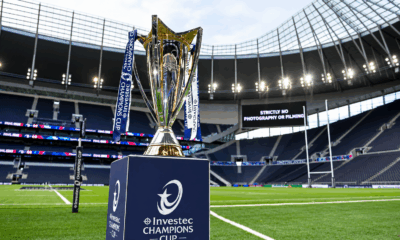
Matthieu Jalibert has been the Player of the Investec Champions Cup this season.
Forwards don’t reach those heights, but the premium tier is still significant. Top locks, tighthead props and No 8s sit in the €500,000 to €650,000 range around R10 million to R12.5 million.
Dupont, for his position is the exception, and the general rule in France’s Top 14 is that the No 10 dictates the cheque. The lock and No 8, the rare athlete profiles, command the next tier and the tighthead prop is the rock around which the salary cap is built.
The system works because the Top 14 does not lose players. It retains its best and attacts the best foreign players, straight out of the junior ranks and celebrated Test players.

For South African rugby, the comparison is uncomfortable.
URC franchises are not operating in the same financial space. They are not close.
That is why SA players, the very best, at some point leave. It is understandably about the cash.
France has built a financial model where success increases spending power and where the best are rewarded.
The Top 14 is results driven, with the rewards of the Investec Champions Cup fuelling the spend in the French club scene.
Toulouse, with six titles, has won the most Champions Cup titles. Bordeaux are the current holders and La Rochelle went back to back a few seasons ago.
None of the South African clubs in the URC can financially compete with the spend of the French clubs.
International Rugby
Top 14 Salaries by Position in Rands (2026 Guide)
From R6.6m flyhalves to R3.9m props, here’s the full Top 14 salary breakdown by position in South African rands.
If you want to understand how France controls the rugby market, start with the positions within the clubs. The No 10s are financial Royalty in the Top 14.
France’s Top 14 club positions are led by the No 10s, on average. Toulouse and France captain Antoine Dupont as a scrumhalf, is the exception in being the highest paid player in the Top 14 and in the sport.
Every position has a value, and those values tell you exactly how the game is priced in France. And how it is played.
The highest-paid position in France is the flyhalf.
The average Top 14 No 10 earns around €340,000 a year. That is roughly R6.6 million. The elite operate between R11million and R23 million, as is the case with the French Test duo Romain Ntamack (Toulouse) and Matthieu Jalibert (Bordeaux).
Historically, foreign No 10 imports have also topped the salary charts, with All Blacks icon Dan Carter (Racing 92), Scotland’s magician Finn Russell (Racing 92), England’s Owen Farrell (Racing 92) and South Africa’s Handre Pollard (Montpellier) among a quartet whose pedigree commanded annual salaries of R20 million.
CASH IS KING: AFRICA PICKS BETTING PLAYBOOKS
The next tier belongs to the power forwards and decision-makers around them.
Locks earn between €290,000 and €300,000. That translates to R5.6 million to R5.9 million. No 8s sit at a similar level, just under €300,000, or about R5.8 million. The very best tightheads are sought after and exceed the average of a tighthead salary.
Centres sit in the middle of the market at around €270,000. That is R5.2 million to R5.3 million. They are not the headline earners, but they are essential to the playing eco-system in salary cap. There have been exceptions on foreign imports, but the general rule is that you buy a No 10 first and never a midfielder ahead of a No 10.
Dupont aside, scrumhalves come in slightly lower, at around €260,000, or just over R5 million. They are obviously important, but not deemed irreplaceable in the same way as a flyhalf.
Then comes the bottom tier.
Front row players – loosehead, hooker and tighthead – typically sit between €200,000 and €240,000. That is R3.9 million to R4.7 million. Depth and playing number options has reduced the position price. The exceptions are the very best tightheads. They are on R10 million-plus.
The same applies to the back three. Wings and fullbacks range between €220,000 and €250,000, unless it is a big name foreign import like Springboks try-scoring record holder Bryan Habana for Toulon a decade ago, Cheslin Kolbe in moving from Toulouse to Toulon or currently the Bordeaux sensation Louis Bielle-Biarrey, whose club contract expires at the end of this season.
Bielle-Biarrey, just 22 years-old, joined Bordeaux from Grenoble as an 18 year-old, but has been named the Six Nations Player of the Tournament in the last two editions of the tournament. He has broken the competition try-scoring record for tries in successive matches and in a competition edition.

The average Top 14 club winger is on R4.3 million to R4.9 million. This is again down to depth, numbers and being spoilt for choice.
The French clubs pay on influence and scarcity in a position.
The No 10 controls the game, so the No 10 controls the market.
The lock and No 8 are rare profiles, so they command a premium.
The very best tightheads are priced with respect.
The props and wings, generally, exist in volume, which determines their lower market value
Top 14 Salaries by Position (Converted to Rands)
| Position | € Average | Rand Equivalent |
|---|---|---|
| Flyhalf (10) | €340,000 | R6.6 million |
| Lock (4/5) | €290k–€300k | R5.6m–R5.9m |
| No 8 | €296,000 | R5.8 million |
| Centres (12/13) | €270,000 | R5.2m–R5.3m |
| Scrumhalf (9) | €260,000 | R5.0 million |
| Back Three (11/14/15) | €220k–€250k | R4.3m–R4.9m |
| Props/Hooker (1–3) | €200k–€240k | R3.9m–R4.7m |
International Rugby
Bok Barometer: Keo picks his Form 23
The Springboks squad is made up of the best South African players across the planet. How different would it look if overseas-based South African players were not eligible for selection?
Keo picks his Form 23 in a Bok Barometer that speaks to only those players based in South Africa.
Rassie Erasmus is spoilt for choice as Springboks coach. It doesn’t matter where a player is based. If he is eligible as a South African, Erasmus can pick him for the Boks.
Bok Barometer Keo: Who are the form South African-based Bok match 23 contenders?
It was something Erasmus insisted on when he returned to South Africa from Munster, Ireland, in 2018 to coach the Springboks, with Jacques Nienaber his deputy. When Erasmus appointed Nienaber as Springboks coach and he oversaw the national set-up as Director of Rugby, the same selection policy applied.
The Boks won the 2019 and 2023 Rugby World Cup titles.
Erasmus’s predecessors could not pick overseas-based South Africans and by 2017 the Boks had slumped to 7th in the world rankings.
England and New Zealand remain the only two countries that still apply a domestic-only player national selection.
Australia has a rule that allows for a handful of overseas-based players eligible for Wallabies selection but with them having plummeted to seventh in the world rankings, don’t be surprised to see new coach Les Kiss given the freedom to pick the best, regardless of where they are based and play their club rugby.
Australia hosts the 2027 World Cup.
Thank goodness there is the policy in place because the Springboks would not have won any World Cup in 2019 and 2023 if they could not have picked those overseas-based players that made up 50 percent of the two World Cup-winning match 23s.
Bok Barometer Keo: How would the Bok match 23 look if Rassie Erasmus could only pick players based in South Africa?
To illustrate how much the situation has evolved and the talent pool in South Africa has improved, a match 23, based exclusively in South Africa, would never be ranked as low as 7th in the world.
Having the additional selection global resources is what separates the Springboks from the rest and reinforces why the Boks currently are the best team in the world.
This is a match 23 I believe would beat England on the 4th July at Ellis Park.
Bok Barometer Keo
15. Aphelele Fassi (Sharks). Covers left and right wing.
14. Canan Moodie (Bulls). Covers left wing and outside centre.
13. Ethan Hooker (Sharks), Covers left and right wing and inside centre.
12. André Esterhuizen (Sharks). Covers loose-forward.
11. Kurt-Lee Arendse (Bulls). Covers fullback.
10. Sacha Feinberg-Mngomezulu (Stormers). Covers inside centre and fullback.
9. Embrose Papier (Bulls). Covers wing.
8. Evan Roos (Stormers). Covers loose-forwards and lock.
7. Elrigh Louw (Bulls). Covers loose-forwards and lock.
6. Siya Kolisi (Sharks). Covers No 8.
5. Ruan Nortje (Bulls)
4. Ruan Vermaak (Bulls)
3. Wilco Louw (Bulls)
2. Johan Grobbelaar (Bulls)
1. Ox Nche (Sharks)
Substitutes:
16. Jan-Hendrik Wessels (Bulls). Covers looshead and hooker.
17. Gerhard Steenekamp (Bulls). Covers loosehead.
18. Neethling Fouche (Stormers). Covers tighthead.
19. Ruan Venter (Lions). Covers lock and flank.
20. Paul de Villiers (Stormers). Covers flank.
21. Morne van den Berg (Lions). Covers scrum half.
22. Handre Pollard (Bulls). Covers flyhalf and inside centre.
23. Damian Willemse. Covers flyhalf, the midfield, right wing and fullback.
*Cameron Hanekom has just returned to rugby after a year injury-enforced lay-off and indications are Fassi will be fit for the international season.
International Rugby
Bielle-Biarrey owns the Six Nations stats sheet
In the 2026 Six Nations, France winger Louis Bielle-Biarrey owned the stats charts. Nine tries, four assists and a presence across ten statistical categories tell the real story of France’s title.
| Pos | Team | P | W | L | BP | PD | Pts |
|---|---|---|---|---|---|---|---|
| 1 | France | 5 | 4 | 1 | 5 | +81 | 21 |
| 2 | Ireland | 5 | 4 | 1 | 3 | +38 | 19 |
| 3 | Scotland | 5 | 3 | 2 | 4 | -1 | 16 |
| 4 | Italy | 5 | 2 | 3 | 1 | -38 | 9 |
| 5 | England | 5 | 1 | 4 | 4 | +2 | 8 |
| 6 | Wales | 5 | 1 | 4 | 2 | -82 | 6 |
International Rugby
From bolter to banished: Augustus defines Bok 2026 omissions
The Springboks 2026 alignment camp is, by definition, Rassie Erasmus naming his best 70 players. That is the starting point for any analysis, and it is why the omission of Juarno Augustus is the story.
Springboks 2026 alignment camp
A year ago ‘Trokkie’ Augustus was the bolter.
He forced his way into the 2025 alignment camp on the back of consistent performances in Europe, carrying with authority and playing with the kind of physical edge that traditionally translates to Springbok rugby. His inclusion suggested momentum and acknowledgement from Erasmus that the player, formerly of the Stormers, had moved from the periphery into genuine national contention.
Augustus made the on-field statement playing for Northampton Saints, but never made it to the Springboks camp because he had not passed a transfer medical to Ulster at the time.
Post this injury-enforced failed medical, Augustus moved to Ulster and has been a strong influence when fit. He had been on the sidelines in early 2026 but showed no rust in dominating the collisions as Ulster beat Edinburgh in the United Rugby Championship last weekend.
Augustus, in the 2025/26 season, has started seven of nine matches for Ulster, with an average playing time of 54 minutes. He has played seven URC matches and two EPCR Challenge Cup matches.
In 2024/25, he started 15 of Northampton’s 19 matches, averaged 56 minutes a game, went past 1000 on-field minutes and was a star performer as the Saints marched toward the Investec Champions Cup final. Augustus missed the losing final against Bordeaux because of injury, but was fabulous in the semi-final win against Leinster at the Aviva Stadium in Dublin.
Less than a year ago, Augustus, a former Junior Springboks Player of the Year, was a headline for all the right reasons. This week, his omission is the headline, given just a few days ago he was named Player of the Match
It does not seem like a minor selection call from Erasmus.
In a system where the alignment camp reflects the coach’s thinking and pretty much his strongest available player pool, absence is definitive. Augustus has not been managed out. On the surface he has been left out, and the distinction matters. It tells you that, right now, he is not viewed as one of the leading options at No 8 or within the broader loose forward mix.
And that is where the context becomes important.
The Springboks are not short on depth in the back row. Established internationals remain in the system, while younger players have been backed through consistent exposure and selection. The competition among No 8 options is intense and Erasmus never selects on sentiment or for the sake of a good news story.
What is perplexing is what has changed regarding Augustus because his on-field performances remain as imposing as they did a year ago.
Erasmus has omitted players from alignment camps previously and picked them to play Test rugby that season.
The exclusion, this week when Erasmus named a virtual alignment camp group of overseas-based South African players eligible for the Boks, does not mean the door is locked, but it certainly doesn’t promise an easy way back in when the reality is that Erasmus has invited 70 players to his two respective camps, 49 for the early March camp in Cape Town, and a further 21 for the virtual camp.
Six players drop out of the Springboks 2026 alignment camp from 2025, but it is the absence of Augustus that defines the shift – from bolter to outside the Bok top 70.
2025 vs 2026 – Players OUT
Forwards omitted (2025 → not in 2026)
| Player | Position | 2025 Status | 2026 Status | Note |
|---|---|---|---|---|
| Juarno Augustus | No 8 | Virtual camp (overseas) | ❌ Omitted | Biggest omission |
| Vincent Koch | Prop | Local camp | ❌ Omitted | Senior tighthead depth |
| Bongi Mbonambi | Hooker | Local camp | ❌ Omitted | Double RWC winner |
| Renzo du Plessis | Loose forward | Local camp | ❌ Omitted | Uncapped Test player |
Backs omitted (2025 → not in 2026)
| Player | Position | 2025 Status | 2026 Status | Note |
|---|---|---|---|---|
| Willie le Roux | Fullback | Local camp | ❌ Omitted | Double World Cup winner |
| Ntokozo Makhaza | Wing | Local camp | ❌ Omitted | Varsity Cup standout |
Springbok fixtures 2026:
International:
Saturday 20 June: Springboks v Barbarians (Nelson Mandela Bay Stadium, Gqeberha) – TICKETS
Nations Championship:
Saturday 4 July: Springboks v England (Ellis Park, Johannesburg)
Saturday 11 July: Springboks v Scotland (Loftus Versfeld, Pretoria)
Saturday 18 July: Springboks v Wales (Hollywoodbets Kings Park, Durban)
Rugby’s Greatest Rivalry:
Saturday 22 August: Springboks v All Blacks (Ellis Park, Johannesburg)
Saturday 29 August: Springboks v All Blacks (DHL Stadium, Cape Town)
Saturday 5 September: Springboks v All Blacks (FNB Stadium, Johannesburg)
Saturday 12 September: Springboks v All Blacks (M&T Bank Stadium, Baltimore, USA)
For available RGR tickets in SA, CLICK HERE
Once-off Tests:
Saturday, 8 August: Argentina v Springboks (venue TBC)
Sunday 27 September: Wallabies v Springboks (Optus Stadium, Perth)
Nations Championship:
Saturday 7 November: Italy v Springboks (venue TBC)
Friday 13 November: France v Springboks (Stade de France, Paris)
Saturday 21 November: Ireland v Springboks (Aviva Stadium, Dublin)
Friday 27 to Sunday 29 November: Finals Weekend (Allianz Stadium, Twickenham, London) – SOURCE
International Rugby
Europe reacts to France’s dramatic Six Nations title
France claimed the 2026 Six Nations title in extraordinary fashion, beating England 48-46 in Paris after Thomas Ramos landed a penalty with the final kick of the match.
The Stade de France thriller produced 94 points and 13 tries, making it one of the highest-scoring Tests in the history of the rivalry.
For France it was their 10th Six Nations title in the professional era, while England’s defeat denied Ireland the championship after a weekend that had swung wildly between contenders.
Across Europe the reaction was dramatic – French media celebrated the spectacle, English outlets lamented the heartbreak and Irish newspapers reflected on a title that slipped away in the final seconds.
France media reaction: ‘A victory of nerve and spectacle’
L’Équipe
Headline: “Ramos au bout du suspense: la France championne!”
(Ramos at the death: France champions!)
France’s leading sports daily focused on the composure of Ramos and the brilliance of winger Louis Bielle-Biarrey, who scored four tries in a match that will be remembered as one of the greatest “Crunch” encounters.
The paper called the final moments “pure theatre in front of a roaring Stade de France.”
Midi Olympique
Headline: “Un Crunch de folie: les Bleus sacrés au bout du pied de Ramos.”
The rugby weekly described the match as one of the wildest finales in Six Nations history, praising France’s attacking intent but warning that conceding 46 points to England exposed defensive vulnerabilities.
Rugbyrama
Headline: “Un final historique: Ramos offre le Tournoi aux Bleus.”
Rugbyrama highlighted the emergence of Bielle-Biarrey as the star of the tournament, noting his try-scoring feats while praising the resilience of Fabien Galthié’s side.
Le Figaro
Headline: “Les Bleus arrachent le Tournoi dans un Crunch irrespirable.”
Le Figaro framed the victory as a triumph of nerve, describing the contest as an instant classic of French attacking rugby.
England media reaction: ‘Heartbreak in a Paris epic’
The Guardian
Headline: “France win Six Nations with last kick as England fall just short.”
The Guardian described the match as an epic finale, praising England’s attacking ambition but noting discipline and key moments ultimately cost Steve Borthwick’s side.
The Times
Headline: “England heartbreak as Ramos penalty steals Six Nations title.”
The Times focused on England’s inability to close out the match after taking the lead late in the contest, questioning game management in the final minutes.
BBC Sport
Headline: “Last-gasp Ramos penalty denies England in Paris thriller.”
BBC analysis praised England’s seven tries but said the defeat would haunt the players after producing their most attacking display of the championship.
The Telegraph
Headline: “Brave England fall short in 94-point Paris epic.”
The Telegraph labelled the match one of the most extraordinary attacking Tests between the nations, highlighting the spectacle despite the defeat.
Ireland media reaction: ‘Title dreams shattered at the death’
Ireland began the final day of the championship still in the hunt for the title and, for several minutes late in the Paris match, looked set to benefit from an English victory.
Ramos’ penalty changed everything.
Irish Times
Headline: “Ireland denied as France snatch Six Nations in Paris drama.”
The Irish Times described the closing minutes as “a cruel twist” for Ireland, who had earlier completed their own victory but were forced to watch events unfold in Paris.
Irish Independent
Headline: “France break Irish hearts with last-kick title win.”
The paper wrote that Ireland’s title hopes were alive until the final whistle, only to be extinguished by Ramos’ decisive kick.
The42.ie
Headline: “Ireland’s title hopes dashed by Ramos’ dramatic penalty.”
Ireland’s leading rugby platform described the finish as “a brutal reminder of the margins that define championship rugby.”
One of the greatest Six Nations finales
Across Europe there was a rare consensus.
The match will be remembered as one of the greatest Six Nations finales ever played a contest that combined relentless attacking rugby, scoreboard chaos and a title decided with the final kick.
International Rugby
France Rugby World Cup Record: Finals, History & Why They Never Won
France has produced unforgettable Rugby World Cup moments, yet in 10 tournaments, over 40 years, they have never won the tournament. Their Rugby World Cup record betrays their status as one of the great rugby nations.
France Rugby World Cup Record Explained
The France Rugby World Cup record includes three final appearances and three silver medals, but they remain the strongest rugby nation never to win the Rugby World Cup.

Photo: Stu Forster/Getty Images
They have enjoyed success in the Six Nations, with their 2026 title win their 10th in Europe’s premier international rugby tournament, which started as the Five Nations and is now the Six Nations, with Italy’s inclusion.
Understanding France rugby World Cup record requires looking at several factors: their repeated finals heartbreak, the inconsistency of the professional era, and their historical struggles against southern hemisphere opposition.
France in World Cup finals
France have reached the Rugby World Cup final three times, but have lost on every occasion.
|
Year |
Host |
Final |
Result |
|---|---|---|---|
|
1987 |
New Zealand |
New Zealand vs France |
Lost 29–9 |
|
1999 |
Wales |
Australia vs France |
Lost 35–12 |
|
2011 |
New Zealand |
New Zealand vs France |
Lost 8–7 |
|
Overall |
|
3 finals |
0 wins – 3 losses |
The closest France have come to lifting the trophy was in 2011. In a dramatic final at Eden Park, they pushed New Zealand all the way before losing 8–7 in one of the tightest finals in Rugby World Cup history.
France’s journey to that final was turbulent, including internal disagreements within the squad, yet they still produced one of the most spirited performances seen in a World Cup final.
Across tournament history, France have also reached the semi-finals six times, confirming their status as a consistent contender even without a title.
France rugby World Cup record
France have competed in every Rugby World Cup since 1987, maintaining one of the stronger overall tournament records among northern hemisphere nations.
|
Tournament |
Played |
Won |
Lost |
Drawn |
|---|---|---|---|---|
|
1987 |
6 |
5 |
1 |
0 |
|
1991 |
4 |
3 |
1 |
0 |
|
1995 |
5 |
3 |
2 |
0 |
|
1999 |
6 |
5 |
1 |
0 |
|
2003 |
7 |
5 |
2 |
0 |
|
2007 |
7 |
5 |
2 |
0 |
|
2011 |
7 |
4 |
3 |
0 |
|
2015 |
5 |
3 |
2 |
0 |
|
2019 |
5 |
3 |
2 |
0 |
|
2023 |
5 |
4 |
1 |
0 |
|
Overall |
57 |
40 |
17 |
0 |
France’s 70% tournament win rate reflects a team that regularly progresses deep into the competition, but they have struggled to finish the job when facing the world’s strongest sides in knockout matches.
Most capped French players at the World Cup
| Rank | Player | RWC Matches | World Cups |
|---|---|---|---|
| 1 | Fabien Pelous | 18 | 1995, 1999, 2003, 2007 |
| 2 | Philippe Sella | 17 | 1987, 1991, 1995 |
| 3 | Raphaël Ibanez | 16 | 1995, 1999, 2003 |
| 3 | Olivier Magne | 16 | 1999, 2003, 2007 |
| 5 | Thierry Dusautoir | 15 | 2007, 2011, 2015 |
| 5 | Vincent Clerc | 15 | 2007, 2011 |
| 5 | Serge Blanco | 15 | 1987, 1991 |
| 8 | Frédéric Michalak | 14 | 2003, 2007, 2011, 2015 |
| 8 | Fabien Galthié | 14 | 1999, 2003 |
| 8 | Abdelatif Benazzi | 14 | 1991, 1995, 1999 |
Most tries at the World Cup
| Rank | Player | Tries | World Cups |
|---|---|---|---|
| 1 | Vincent Clerc | 11 | 2007, 2011 |
| 2 | Christophe Dominici | 8 | 1999, 2003, 2007 |
| 3 | Jean-Baptiste Lafond | 6 | 1991 |
| 3 | Émile Ntamack | 6 | 1995, 1999 |
| 3 | Damian Penaud | 6 | 2019, 2023 |
| 6 | Didier Camberabero | 5 | 1987 |
| 6 | Philippe Saint-André | 5 | 1991, 1995 |
| 6 | Philippe Sella | 5 | 1987, 1991, 1995 |
Most points at the World Cup
| Rank | Player | Points | World Cups |
|---|---|---|---|
| 1 | Thierry Lacroix | 124 | |
| 2 | Frédéric Michalak | 116 | |
| 3 | Christophe Lamaison | 65 | |
| 4 | Jean-Baptiste Elissalde | 61 | |
| 5 | Didier Camberabero | 59 | |
| 6 | Camille Lopez | 53 | |
| 7 | Gérald Merceron | 50 | |
| 8 | Morgan Parra | 48 | |
| 9 | Romain Ntamack | 45 | |
| 10 | Thomas Castaignède | 45 |
Professional era inconsistency
One of the key reasons often cited when asking why France never win the World Cup is inconsistency during the professional era.
Since rugby union turned professional in 1995, France have often struggled to maintain continuity at international level. Their domestic league, the Top 14, is one of the richest and most demanding competitions in the world. While it produces elite players, the long season and physical toll can make it difficult for the national side to build stability.
Between 2011 and 2019, France experienced a turbulent period marked by coaching changes, fluctuating performances and inconsistent results against top-tier opponents.
However, the current generation has helped restore stability. Under head coach Fabien Galthié, France won the 2022 Six Nations Grand Slam and re-established themselves as one of the world’s leading teams.
Record vs southern hemisphere
Another key factor behind France’s World Cup struggles is their historical record against the southern hemisphere powers.
France vs southern hemisphere nations (all-time Tests)
|
Opponent |
Played |
France Wins |
Opponent Wins |
Draws |
|---|---|---|---|---|
|
67 |
15 |
51 |
1 |
|
|
47 |
12 |
29 |
6 |
|
|
64 |
28 |
34 |
2 |
|
|
56 |
40 |
15 |
1 |
|
|
Overall |
234 |
95 |
129 |
10 |
France have historically struggled against New Zealand and South Africa, with both nations holding dominant head-to-head records.
Australia have also maintained a slight advantage, while France hold a strong record over Argentina.
Despite these numbers, France have produced some of the greatest upsets in World Cup history, including their famous 1999 semi-final victory over New Zealand and the 2007 quarter-final win against the All Blacks in Cardiff.
Those matches highlight France’s unique reputation in world rugby: a team capable of defeating anyone on the biggest stage.
Why France are different at home
France have traditionally been a very different team when playing at home.
The passionate atmosphere in French stadiums, combined with the emotional style of play often associated with Les Bleus, has helped the team produce some of their best performances on home soil.
This advantage was evident during the build-up to the 2023 Rugby World Cup, when France entered the tournament among the favourites after several strong seasons.
Crowd support, momentum and confidence have often played a major role in France’s performances in major tournaments.
Can they win in 2027?
Looking ahead, France appear well positioned to challenge for the Rugby World Cup again in 2027.
The current generation of players has developed within a strong domestic system and has gained valuable experience competing at the highest level. Combined with the tactical clarity introduced under Fabien Galthié, France have become one of the most balanced teams in world rugby.
However, the ultimate challenge remains the same as it has been throughout their World Cup history: defeating the southern hemisphere giants in knockout matches.
If France can consistently overcome teams like New Zealand, South Africa and Australia when it matters most, they may finally end their long wait for a first Rugby World Cup title.
International Rugby
Springboks v All Blacks: Rugby’s Greatest Rivalry
The Springboks and All Blacks have played 110 Tests and produced the fiercest contest in rugby. Here is the full head-to-head record, rivalry history, biggest wins and why it remains rugby’s greatest rivalry.
The Springboks and All Blacks is Rugby’s Greatest Rivalry. The two nations have played 110 Tests and produced the fiercest contest in rugby. Here is the full Springboks vs All Blacks record and rivalry history.
Springboks vs All Blacks: Rugby’s Greatest Rivalry.
-
What is the Springboks vs All Blacks record?
-
The biggest Springbok win over the All Blacks
-
The biggest All Blacks win over the Springboks
-
Why this is rugby’s greatest rivalry
-
The latest chapter in the rivalry
-
Springboks vs All Blacks: the verdict
There is no bigger fixture in rugby than the Springboks against the All Blacks.
LATEST NEWS ON RUGBY’S GREATEST RIVALRY
This is the one.
It is rugby’s most loaded rivalry, the one with the deepest history, the greatest tension, and the strongest claim to excellence. Between them, South Africa and New Zealand have set the standard for what Test rugby should look like: hard, clever, physical, unrelenting. They don’t just play for points. They play for hierarchy.
As of the end of the 2025 Rugby Championship meetings, the teams had met 110 times in Test rugby. The All Blacks lead the all-time series with 63 wins, the Springboks have 43, and there have been 4 draws.
That number matters, but it only tells part of the story.
Every era has had its own version of South Africa versus New Zealand. The early tours gave it its edge, but the apartheid years also gave it political charge. Professionalism gave it speed and scale, and the rivalry, in the Rassie Erasmus era, is at its most intense.
ALL BLACKS COACH DAVE RENNIE IS A RED FLAG FOR RASSIE’S BOKS
What is the Springboks vs All Blacks record?
The raw record is straightforward enough.
The Springboks and All Blacks have played 110 Tests. New Zealand have won 63, South Africa 43, with 4 draws. That makes New Zealand the only major nation with a positive all-time record against South Africa, which is why every Springbok win over the All Blacks carries outsized value.
The recent trend, however, tells a sharper story.
South Africa beat New Zealand twice in 2024 31-27 at Ellis Park and 18-12 in Cape Town to reclaim the Freedom Cup. In 2025, the All Blacks won 24-17 at Eden Park, but the Springboks answered a week later with a seismic 43-10 win in Wellington, a result SA Rugby described as the biggest defeat ever inflicted on the All Blacks.
So while New Zealand still lead the century-long rivalry overall, the modern contest is tighter, nastier and far less predictable than the old numbers suggest.
The biggest Springbok win over the All Blacks
South Africa’s biggest win, 35-7 at Twickenham a month before the 2023 World Cup, was the Boks benchmark 100-plus years in the making, but within two years that record was broken.
The new high-water mark came in Wellington on 13 September 2025, when the Springboks demolished the All Blacks 43-10. SA Rugby explicitly called it the All Blacks’ biggest defeat ever, and noted that it surpassed the 35-7 margin from London in 2023.
That matters historically and psychologically.
South Africa have always believed they can beat New Zealand. But there is a difference between belief and force. The 43-10 result was force. It was a reminder that when the Springboks got their collision game, bench impact and tactical pressure exactly right, they could break even the All Blacks in New Zealand.
The biggest All Blacks win over the Springboks
New Zealand’s biggest win in the rivalry remains the brutal 57-0 victory in 2017, still South Africa’s heaviest defeat in Test history. SA Rugby itself referred to it in retrospect as a record defeat by New Zealand.
That result remains one of the rivalry’s most important reference points because it sits at the opposite end of the emotional scale from the Springboks’ recent resurgence. It was humiliation then. The modern Bok revival has been built, in part, on making sure that kind of capitulation never happens again.
Why this is rugby’s greatest rivalry
The phrase is not marketing fluff.
South Africa and New Zealand have been the sport’s two most imposing rugby nations across generations. They have the tradition, the depth, the public pressure, the tactical intelligence and the expectation. More than that, each has usually been measured most accurately by how it performs against the other.
SA Rugby itself now brands the fixture as Rugby’s Greatest Rivalry, and the 2026 tour has been designed around that idea, with four Tests scheduled between the Springboks and All Blacks, including a Test in Baltimore, USA. That commercial packaging works because it is built on a truth rugby people already understand: no fixture carries more historical weight.
There are bigger sporting events globally, but in rugby, nothing feels more final than Springboks versus All Blacks.
The latest chapter in the rivalry
The latest sequence of matches has added another layer to the story.
In 2024, South Africa beat New Zealand twice in one Rugby Championship campaign, first at Ellis Park and then in Cape Town. The second win secured the Freedom Cup and kept the Springboks unbeaten in that championship stretch.
In 2025, the All Blacks protected Eden Park with a 24-17 win in Auckland, before South Africa hit back with the 43-10statement in Wellington. The official Springbok record published before the Auckland match was 108 played, 42 won, 62 lost, 4 drawn; after Auckland it became 109 played, 42 won, 63 lost, 4 drawn; and after Wellington the all-time tally moved to 110 played, 43 won, 63 lost, 4 drawn.
Springboks vs All Blacks: the verdict
The All Blacks still lead the rivalry on total wins.
But the modern Springboks have changed the feel of the contest. They have beaten New Zealand in World Cup finals, beaten them back-to-back in South Africa, and in 2025 handed them the heaviest defeat in their history in their own country.
That is why the Springboks versus All Blacks fixture remains unmatched. It is not just the best rivalry because of the past. It is the best rivalry because the next chapter still matters.
And in this rivalry, more than any other in rugby, history is never finished.
Rugby’s Greatest Rivalry tour fixtures 2026
Friday 7 August: DHL Stormers v All Blacks at DHL Stadium, Cape Town
Tuesday 11 August: Hollywoodbets Sharks v All Blacks at Hollywoodbets Kings Park, Durban
Saturday 15 August: Vodacom Bulls v All Blacks at Loftus Versfeld, Pretoria
Saturday 22 August: First Test – Springboks v All Blacks at Ellis Park, Johannesburg
Tuesday 25 August: Lions v New Zealand at Ellis Park, Johannesburg
Saturday 29 August: Second Test – Springboks v New Zealand at DHL Stadium, Cape Town
Saturday 5 September: Third Test – Springboks v New Zealand at FNB Stadium, Johannesburg Saturday 12 September:
Saturday 12th September: Fourth Test – Springboks v New Zealand in Baltimore, Maryland
SPRINGBOKS v ALL BLACKS – EVERY TEST RESULT
| Date | Status | Team | Score | Team | Score | Venue |
| 13/08/21 | Test | South Africa | 5 | New Zealand | 13 | Dunedin |
| 27/08/21 | Test | South Africa | 9 | New Zealand | 5 | Auckland |
| 17/09/21 | Test | South Africa | 0 | New Zealand | 0 | Wellington |
| 30/06/28 | Test | South Africa | 17 | New Zealand | 0 | Durban |
| 21/07/28 | Test | South Africa | 6 | New Zealand | 7 | Johannesburg |
| 18/08/28 | Test | South Africa | 11 | New Zealand | 6 | Port Elizabeth |
| 01/09/28 | Test | South Africa | 5 | New Zealand | 13 | Newlands |
| 14/08/37 | Test | South Africa | 7 | New Zealand | 13 | Wellington |
| 04/09/37 | Test | South Africa | 13 | New Zealand | 6 | Christchurch |
| 25/09/37 | Test | South Africa | 17 | New Zealand | 6 | Auckland |
| 16/07/49 | Test | South Africa | 15 | New Zealand | 11 | Newlands |
| 13/08/49 | Test | South Africa | 12 | New Zealand | 6 | Johannesburg |
| 03/09/49 | Test | South Africa | 9 | New Zealand | 3 | Durban |
| 17/09/49 | Test | South Africa | 11 | New Zealand | 8 | Port Elizabeth |
| 14/07/56 | Test | South Africa | 6 | New Zealand | 10 | Dunedin |
| 04/08/56 | Test | South Africa | 8 | New Zealand | 3 | Wellington |
| 18/08/56 | Test | South Africa | 10 | New Zealand | 17 | Christchurch |
| 01/09/56 | Test | South Africa | 5 | New Zealand | 11 | Auckland |
| 25/06/60 | Test | South Africa | 13 | New Zealand | 0 | Johannesburg |
| 23/07/60 | Test | South Africa | 3 | New Zealand | 11 | Newlands |
| 13/08/60 | Test | South Africa | 11 | New Zealand | 11 | Bloemfontein |
| 27/08/60 | Test | South Africa | 8 | New Zealand | 3 | Port Elizabeth |
| 31/07/65 | Test | South Africa | 3 | New Zealand | 6 | Wellington |
| 21/08/65 | Test | South Africa | 0 | New Zealand | 13 | Dunedin |
| 04/09/65 | Test | South Africa | 19 | New Zealand | 16 | Christchurch |
| 18/09/65 | Test | South Africa | 3 | New Zealand | 20 | Auckland |
| 25/07/70 | Test | South Africa | 17 | New Zealand | 6 | Pretoria |
| 08/08/70 | Test | South Africa | 8 | New Zealand | 9 | Newlands |
| 29/08/70 | Test | South Africa | 14 | New Zealand | 3 | Port Elizabeth |
| 12/09/70 | Test | South Africa | 20 | New Zealand | 17 | Johannesburg |
| 24/07/76 | Test | South Africa | 16 | New Zealand | 7 | Durban |
| 14/08/76 | Test | South Africa | 9 | New Zealand | 15 | Bloemfontein |
| 04/09/76 | Test | South Africa | 15 | New Zealand | 10 | Newlands |
| 18/09/76 | Test | South Africa | 15 | New Zealand | 14 | Johannesburg |
| 15/08/81 | Test | South Africa | 9 | New Zealand | 14 | Christchurch |
| 29/08/81 | Test | South Africa | 24 | New Zealand | 12 | Wellington |
| 12/09/81 | Test | South Africa | 22 | New Zealand | 25 | Auckland |
| 15/08/92 | Test | South Africa | 24 | New Zealand | 27 | Johannesburg |
| 09/07/94 | Test | South Africa | 14 | New Zealand | 22 | Dunedin |
| 23/07/94 | Test | South Africa | 9 | New Zealand | 13 | Wellington |
| 06/08/94 | Test | South Africa | 18 | New Zealand | 18 | Auckland |
| 24/06/95 | RWC | South Africa | 15 | New Zealand | 12 | Johannesburg |
| 20/07/96 | Test | South Africa | 11 | New Zealand | 15 | Christchurch |
| 10/08/96 | Test | South Africa | 18 | New Zealand | 29 | Cape Town |
| 17/08/96 | Test | South Africa | 19 | New Zealand | 23 | Durban |
| 24/08/96 | Test | South Africa | 26 | New Zealand | 33 | Pretoria |
| 31/08/96 | Test | South Africa | 32 | New Zealand | 22 | Johannesburg |
| 19/07/97 | Test | South Africa | 32 | New Zealand | 35 | Johannesburg |
| 09/08/97 | Test | South Africa | 35 | New Zealand | 55 | Auckland |
| 25/07/98 | Test | South Africa | 13 | New Zealand | 3 | Wellington |
| 15/08/98 | Test | South Africa | 24 | New Zealand | 23 | Durban |
| 10/07/99 | Test | South Africa | 0 | New Zealand | 28 | Dunedin |
| 07/08/99 | Test | South Africa | 18 | New Zealand | 34 | Pretoria |
| 04/11/99 | RWC | South Africa | 22 | New Zealand | 18 | Cardiff |
| 22/07/00 | Test | South Africa | 12 | New Zealand | 25 | Christchurch |
| 19/08/00 | Test | South Africa | 46 | New Zealand | 40 | Johannesburg |
| 21/07/01 | Test | South Africa | 3 | New Zealand | 12 | Cape Town |
| 25/08/01 | Test | South Africa | 15 | New Zealand | 26 | Auckland |
| 20/07/02 | Test | South Africa | 20 | New Zealand | 41 | Wellington |
| 10/08/02 | Test | South Africa | 23 | New Zealand | 30 | Durban |
| 19/07/03 | Test | South Africa | 16 | New Zealand | 52 | Pretoria |
| 09/08/03 | Test | South Africa | 11 | New Zealand | 19 | Dunedin |
| 08/11/03 | RWC | South Africa | 9 | New Zealand | 29 | Melbourne |
| 24/07/04 | Test | South Africa | 21 | New Zealand | 23 | Christchurch |
| 14/08/04 | Test | South Africa | 40 | New Zealand | 26 | Johannesburg |
| 06/08/05 | Test | South Africa | 22 | New Zealand | 16 | Cape Town |
| 27/08/05 | Test | South Africa | 27 | New Zealand | 31 | Dunedin |
| 22/07/06 | Test | South Africa | 17 | New Zealand | 35 | Wellington |
| 26/08/06 | Test | South Africa | 26 | New Zealand | 45 | Pretoria |
| 02/09/06 | Test | South Africa | 21 | New Zealand | 20 | Rustenburg |
| 23/06/07 | Test | South Africa | 21 | New Zealand | 26 | Durban |
| 14/07/07 | Test | South Africa | 6 | New Zealand | 33 | Christchurch |
| 05/07/08 | Test | South Africa | 8 | New Zealand | 19 | Wellington |
| 12/07/08 | Test | South Africa | 30 | New Zealand | 28 | Dunedin |
| 16/08/08 | Test | South Africa | 0 | New Zealand | 19 | Newlands |
| 25/07/09 | Test | South Africa | 28 | New Zealand | 19 | Bloemfontein |
| 01/08/09 | Test | South Africa | 31 | New Zealand | 19 | Durban |
| 12/09/09 | Test | South Africa | 32 | New Zealand | 29 | Hamilton |
| 10/07/10 | Test | South Africa | 12 | New Zealand | 32 | Auckland |
| 17/07/10 | Test | South Africa | 17 | New Zealand | 31 | Wellington |
| 21/08/10 | Test | South Africa | 22 | New Zealand | 29 | Soweto |
| 30/07/11 | Test | South Africa | 7 | New Zealand | 40 | Wellington |
| 20/09/11 | Test | South Africa | 18 | New Zealand | 5 | Port Elizabeth |
| 15/09/12 | Test | South Africa | 11 | New Zealand | 21 | Dunedin |
| 06/10/12 | Test | South Africa | 16 | New Zealand | 32 | Johannesburg |
| 14/09/13 | Test | South Africa | 15 | New Zealand | 29 | Auckland |
| 05/10/13 | Test | South Africa | 27 | New Zealand | 38 | Johannesburg |
| 13/09/14 | Test | South Africa | 10 | New Zealand | 14 | Wellington |
| 04/10/14 | Test | South Africa | 27 | New Zealand | 25 | Johannesburg |
| 25/07/15 | Test | South Africa | 20 | New Zealand | 27 | Johannesburg |
| 24/10/15 | Test | South Africa | 18 | New Zealand | 20 | London |
| 17/09/16 | Test | South Africa | 13 | New Zealand | 41 | Christchurch |
| 08/10/16 | Test | South Africa | 15 | New Zealand | 57 | Durban |
| 16/09/17 | Test | South Africa | 0 | New Zealand | 57 | Albany |
| 07/10/17 | Test | South Africa | 24 | New Zealand | 25 | Cape Town |
| 15/09/18 | Test | South Africa | 36 | New Zealand | 34 | Wellington |
| 6/10/18 | Test | South Africa | 30 | New Zealand | 32 | Pretoria |
| 27/07/19 | Test | South Africa | 16 | New Zealand | 16 | Wellington |
| 21/09/19 | RWC | South Africa | 13 | New Zealand | 23 | Japan |
| 25/09/21 | Test | South Africa | 17 | New Zealand | 19 | Queensland |
| 2/10/21 | Test | South Africa | 31 | New Zealand | 29 | Queensland |
| 6/08/22 | Test | South Africa | 26 | New Zealand | 10 | Mbombela |
| 13/8/22 | Test | South Africa | 23 | New Zealand | 35 | Johannesburg |
| 15/7/23 | Test | South Africa | 20 | New Zealand | 35 | Auckland |
| 25/8/23 | Test | South Africa | 35 | New Zealand | 7 | London |
| 28/10/23 | RWC | South Africa | 12 | New Zealand | 11 | Paris |
| 31/8/24 | Test | South Africa | 31 | New Zealand | 27 | Johannesburg |
| 7/9/24 | Test | South Africa | 18 | New Zealand | 12 | Cape Town |
| 6/9/2025 | Test | South Africa | 17 | New Zealand | 24 | Duneden |
| 13/9/2025 | Test | South Africa | 43 | New Zealand | 10 | Wellington |
| Total Points: | 1785 | 2225 |
| Games Played | South Africa | New Zealand | Drawn | |
| Played | Won | Won | Drawn | |
| Overall Record | 110 | 43 | 63 | 4 |
| At South African Venues | 54 | 28 | 25 | 1 |
| At New Zealand Venues | 47 | 10 | 33 | 3 |
| RWC | 8 | 4 | 4 | 0 |
| Name | Country | Points | Tries | Conversions | Penalties | Drop Goals |
|---|---|---|---|---|---|---|
| Dan Carter | NZ | 221 | 3 | 25 | 51 | 1 |
| Andrew Mehrtens | NZ | 209 | 0 | 19 | 53 | 4 |
| Beauden Barrett | NZ | 174 | 4 | 23 | 36 | 0 |
| Handre Pollard | SA | 109 | 2 | 18 | 19 | 2 |
| Percy Montgomery | SA | 103 | 1 | 16 | 19 | 3 |
| Carlos Spencer | NZ | 84 | 3 | 12 | 15 | 0 |
| Morne Steyn | SA | 71 | 1 | 3 | 19 | 1 |
| Joel Stransky | SA | 54 | 0 | 3 | 14 | 2 |
| Christian Cullen | NZ | 50 | 10 | 0 | 0 | 0 |
| Naas Botha | SA | 44 | 0 | 7 | 9 | 1 |
| Andre Pretorius | SA | 41 | 1 | 6 | 6 | 2 |
| Joe Rokococo | NZ | 45 | 9 | 0 | 0 | 0 |
| Braam van Straaten | SA | 40 | 0 | 5 | 10 | 0 |
| Bryan Habana | SA | 40 | 8 | 0 | 0 | 0 |
RUGBY’S GREATEST RIVALRY – IT DOES NOT GET BIGGER THAN SPRINGBOKS v ALL BLACKS
FAQ
What is the Springboks vs All Blacks record?
The All Blacks lead the all-time Test rivalry 63 wins to 43, with 4 draws after 110 matches.
What is the Springboks’ biggest win over the All Blacks?
South Africa’s biggest win over New Zealand is the 43-10 victory in Wellington on 13 September 2025.
What is the All Blacks’ biggest win over the Springboks?
New Zealand’s biggest win over South Africa is 57-0 in 2017.
Why is Springboks vs All Blacks called rugby’s greatest rivalry?
Because it combines more than a century of Test history, elite winning standards, repeated title-deciding matches and consistent relevance at the top of world rugby. SA Rugby now officially uses the term “Rugby’s Greatest Rivalry” for the fixture. The two nations have combined for seven World Cup titles.
Rivalry snapshot
The Springboks and All Blacks had played 110 Tests by the end of the 2025 meetings. New Zealand lead the rivalry 63 wins to South Africa’s 43, with 4 draws. South Africa’s current split is 25 wins, 28 losses and 1 draw at South African venues; 10 wins, 33 losses and 3 draws at New Zealand venues; and 4 wins, 2 losses, 0 draws at Rugby World Cup meetings.
The rivalry began with South Africa’s 1921 tour of New Zealand. That first official Test series finished 1-1 with one draw, the decider ending 0-0 in Wellington. The 1928 All Blacks tour of South Africa finished 2-2. Those two tours established the rivalry’s core pattern: long tours, brutal series, and no easy separation between the teams.
Team records
Most wins in the rivalry: New Zealand 63.
Most losses in the rivalry: South Africa 63.
Most draws in the rivalry: 4.
Springboks’ biggest win over the All Blacks: 43-10 in Wellington on 13 September 2025. SA Rugby called it the All Blacks’ biggest defeat ever.
Previous Springbok record win over New Zealand: 35-7 at Twickenham on 25 August 2023. SA Rugby stated that the 28-point margin was then a new South African record against the All Blacks and that it was New Zealand’s heaviest defeat at the time.
All Blacks’ biggest win over the Springboks: 57-0 at Albany on 16 September 2017. SA Rugby’s 2017 annual report described it as the Springboks’ heaviest defeat in history.
Highest score by South Africa against New Zealand: 46, in the 46-40 win at Johannesburg on 19 August 2000. NZ Rugby Stats also credits that match with South Africa’s rivalry high for tries in a Test, at 6.
Highest score by New Zealand against South Africa: 57, in the 57-0 win in 2017.
Highest combined score in a Springboks-All Blacks Test: 86 points, South Africa 46 New Zealand 40, Johannesburg, 19 August 2000.
Highest aggregate scores – Rugby’s Greatest Rivalry
In New Zealand
-
90 points
-
All Blacks vs Springboks Eden Park Test 1997
-
New Zealand 55–35 South Africa
-
Source: NZ Rugby Stats
In South Africa
-
86 points
-
Springboks vs All Blacks Ellis Park Test 2000
-
South Africa 46–40 New Zealand
-
Source: NZ Rugby Stats
Neutral venues (Australia / UK / Rugby World Cups in Wales, Australia, England, Japan & France)
-
60 points
-
Springboks vs All Blacks Gold Coast Test 2021
-
South Africa 31–29 New Zealand
-
Source: NZ Rugby Stats
Lowest-scoring draw: 0-0, Wellington, 1921 series decider.
Most emphatic South African shutout of New Zealand: 17-0 in Durban in 1928, still South Africa’s biggest winning margin in the rivalry according to SA Rugby Stats.
Longest Springbok winning streak: 6 Tests, from the 1937 tour to New Zealand through the 1949 whitewash in South Africa. SA Rugby states the six-match run lasted from 1937 to 1949.
Longest All Blacks winning streak: 8 Tests, from 21 July 2001 through 24 July 2004, based on the full official chronological results list.
Best Springbok run in New Zealand in the professional era: the Boks were unbeaten in three straight Tests at Sky Stadium, winning in 2018, drawing in 2019, and winning 43-10 in 2025.
Eden Park hoodoo: SA Rugby stated before the 2025 Auckland Test that South Africa had not beaten New Zealand at Eden Park since 1937. The All Blacks won there again on 6 September 2025.
Ellis Park edge: Planet Rugby’s venue audit put the rivalry at Ellis Park at 15 Tests, with South Africa winning 9 and New Zealand 6, and South Africa leading points 352-328 there.
Rugby World Cup records
The teams have met 8 times at Rugby World Cups, with 4 wins each. SA Rugby’s 2019 pre-match official numbers had the rivalry at 4 World Cup meetings and 2-2 before Japan; adding South Africa’s wins in the 2023 final and New Zealand’s pool win in 2019 brings the current World Cup ledger to 4-4, which matches the full results list.
World Cup finals between them: 2. South Africa won both: 15-12 after extra time in 1995, and 12-11 in Paris in 2023.
Other World Cup meetings: South Africa won the 1999 bronze final 22-18; New Zealand won the 2003 quarter-final 29-9, the 2015 semi-final 20-18, and the 2019 pool match 23-13.
Freedom Cup records
The Freedom Cup was first contested in 2004. By the end of the 2025 matches, New Zealand had won it 25 times to South Africa’s 14, with one drawn edition in the official Freedom Cup record. South Africa won it in 2024 for the first time since 2009 and retained it in 2025.
Individual scoring records
The cleanest verified rivalry-specific individual table available in the sourced material is the SA Rugby Stats head-to-head page.
Top points scorers in Springboks-All Blacks Tests
-
Dan Carter 221
-
Andrew Mehrtens 209
-
Beauden Barrett 174
-
Handre Pollard 109
-
Percy Montgomery 103
-
Carlos Spencer 84
-
Morné Steyn 71
-
Joel Stransky 54
-
Christian Cullen 50
-
Naas Botha 44
Top try scorers in the rivalry from the same verified table
Christian Cullen (NZL) 10; Joe Rokocoko (NZL) 9; Bryan Habana (SA) 8. The same table also shows Dan Carter scored 3 tries, Beauden Barrett 4, Handre Pollard 2 and Percy Montgomery 1 as part of their points totals.
Captaincy and streak notes
Siya Kolisi captained South Africa to four consecutive wins over New Zealand across 2023-24 before the Eden Park loss in 2025. SA Rugby’s official build-up to Cape Town 2024 said a fourth straight win would be only the second such Bok sequence in history, after the 1937-49 run; South Africa then won in Cape Town, and Rugby365 described the Boks as having recorded four consecutive victories over the All Blacks.
Tour history: All Blacks to South Africa
1928 first official All Blacks tour of South Africa; Test series drawn 2-2.
1949 Springboks won the series 4-0, one of the defining series results in rugby history. NZHistory says the whitewash plunged New Zealand into despair.
1960 All Blacks toured South Africa; Springboks won the four-Test series 2-1 with one draw.
1967 planned All Blacks tour cancelled because South Africa refused to accept Māori players.
1970 All Blacks toured after the “honorary whites” compromise; Springboks won the series 3-1.
1976 All Blacks toured South Africa; Springboks won 3-1. The tour triggered major international backlash and helped drive the African-led boycott of the Montreal Olympics.
1985 planned official tour stopped by the New Zealand High Court.
1986 Cavaliers rebel tour, not an official All Blacks tour; South Africa won that unofficial series 3-1.
1992 first official meeting after readmission, one-off Test at Ellis Park, won 27-24 by New Zealand.
1996 the great professional-era watershed. New Zealand won the away Test series 2-1, their first official series win in South Africa. SA Rugby’s 2025 announcement called 1996 New Zealand’s last major tour of South Africa.
2026 officially announced return tour, the first major All Blacks tour of South Africa since 1996, with matches against the franchises and a four-Test Bok series.
Tour history: Springboks to New Zealand
1921 first Springbok tour to New Zealand; series drawn 1-1 with one draw.
1937 Springboks won the series 2-1; SA Rugby Stats notes that side was called “the best team to ever leave New Zealand.”
1956 All Blacks won 3-1, their first series win over South Africa. NZHistory calls it one of the bitterest series ever played.
1965 All Blacks won 3-1.
1973 planned Springbok tour to New Zealand was blocked by Prime Minister Norman Kirk on public-safety grounds.
1981 Springbok tour went ahead despite the Gleneagles climate; New Zealand won the series 2-1. NZHistory records the tour as one of the most divisive episodes in New Zealand history.
1994 first full Bok series in New Zealand after isolation; All Blacks won 2-0 with one draw.
1996 South Africa played a three-Test mid-year series in New Zealand and lost all three.
2030 officially announced as South Africa’s first professional-era tour to New Zealand.
Strong “interesting stats” file
South Africa have won only 10 of 47 Tests at New Zealand venues, which tells you how rare Bok wins in New Zealand really are.
The Springboks’ 36-34 win in Wellington in 2018 was, per SA Rugby, the first time any team had scored 36 points against the All Blacks on New Zealand soil.
The 35-7 win at Twickenham in 2023 was New Zealand’s heaviest defeat until the 43-10 loss in Wellington in 2025 overtook it. SA Rugby stated both records at the time.
South Africa’s 1949 whitewash and New Zealand’s 1956 series win remain two of the rivalry’s great reference points; NZHistory treats both as nation-shaping rugby events.
The rivalry has produced two Rugby World Cup finals and eight World Cup meetings overall. No other fixture in men’s Test rugby carries that combination of depth, volume and silverware history. The record book backs the mythology.
International Rugby
Andre Esterhuizen is the STECO hybrid power tools hero
Andre Esterhuizen and his hybrid rugby qualities have reaped reward off the field. He is the STECO Hybrid Power Tools Hero and Hybrid Craftsman for South Africa’s hottest new power tool brand, with 40 years of RYOBI credibility.
RUGBY’S FIRST HYBRID TEST PLAYER
Esterhuizen, recently on the cover of SA Rugby Magazine, has been outstanding for the Springboks and the Sharks, whom he captained in his 100th match and continues to lead in the United Rugby Championship.
John Stevens, RYOBI Africa and STECO CEO, in confirming the alignment with Andre ‘the Giant’ and the Hybrid Craftsman campaign, said it was a giant step into the rugby landscape for them as a business, but one that made for a perfect fit, given Esterhuizen’s role as Test rugby’s first proper hybrid player and the power of STECO’s hybrid tools.
‘The Shark’s captain and Springbok utility back has been moulded by coach Rassie Erasmus into the world’s first hybrid player; essentially he is versatile enough to perform at the highest level, globally, as both a back and a forward. This is a perfect metaphor for our STECO offering.’
‘Most power tools are walled gardens, but we have designed STECO batteries to work on RYOBI products and vice versa. Our industry-leading 20v batteries last longer, perform better, and offer the performance and power needed for residential and commercial building projects.’

Esterhuizen says, ‘It’s an absolutely synergistic partnership that just makes sense. The STECO team is proudly South African with several decades worth of credibiity. The Stevens and co team have built one of the most envious power tools offerings on the continent but their after sales, hands on approach, puts the customer at the heart of everything that they do. I’m honoured to represent my country, when given the opportunity. I am relishing the hybrid role that was created for me, and I’m excited to get to work with STECO as the hybrid craftsman, with the hybrid tools that I have at my disposal.’
STECO has been a partner of Keo.co.za and the Keo & Zels show for the past 18 months, with Keo & Zels dedicating a section of the show to the STECO Power Play of the weekend.
View this post on Instagram
That Power Play will now be the Hybrid Power Tools Hero of the weekend, with great competition prizes to be won.

BOKS SCRUM A STECO POWER PLAY OF BRUTALITY AND BEAUTY
International Rugby
France: Rugby’s Most Seductive Illusion
France are rugby’s great illusion: Celebrated as royalty at home, but on the road they have too often travelled as peasants, as witnessed with the Murrayfield massacre in Scotland scoring 50 points.
The Six Nations match ended 50-40 to Scotland, but don’t be fooled. The story is Scotland scoring 40 unanswered points in the 20 minutes before half time and the 20 after the break.
Charitable tries to France in the final five minutes was never going to change the result, and it should not change the reflection of the match.
Rugby has always been seduced by France. The jerseys, the flair, the romance, the idea that somewhere inside the chaos lies genius. But the professional record, since 1996, tells a colder story.
Four wins from 40 Tests in New Zealand, Australia and South Africa.
No World Cup gold in 8 tournaments over 30 years
No southern hemisphere series victories.
Nine European titles in three decades.
I am among those always seduced by the folklore of the French, by the celebrated one-off World Cup wins against the All Blacks at Twickenham in the 1999 RWC semi-final and the 20-18 win against the All Blacks at the 2007 RWC quarter-final in Cardiff.
What followed was France losing the next match, one in a final and one in a semi-final.
France, when they hosted the 2007 World Cup, lost the opening match to Argentina and they lost the play-off for third and fourth place to Argentina.
France, in hosting the 2023 World Cup, lost to the defending champion Springboks in the quarter-final.
No Test rugby nation has ever enjoyed such continued hype and delivered such consistent failures.
Tests in the southern hemisphere against the Big Three:
-
Played: 40
-
Won: 4
-
Lost: 35
- Drawn: 1
-
Win rate: 10%
The Breakdown:
-
New Zealand in New Zealand: 1 win from 18 Tests
-
Australia in Australia: 1 wins from 14 Tests
-
South Africa in South Africa: 2 wins from 8 Tests
France have not won a Test series in New Zealand, Australia or South Africa since the game turned professional in 1996.
At home against the same three nations:
-
Played: 40 Tests
-
Won: 17
-
Lost: 22
- Drawn: 1
The All Blacks between 2004 and 2017 won seven times in succession in France.
-
27 Nov 2004, Stade de France New Zealand 45-6 France
-
11 Nov 2006, Stade de Gerland New Zealand 47-3 France
-
18 Nov 2006, Stade de France New Zealand 23-11 France
-
28 Nov 2009, Stade Vélodrome New Zealand 39-12 France
-
9 Nov 2013, Stade de France New Zealand 26-19 France
-
26 Nov 2016, Stade de France New Zealand 24-19 France
-
11 Nov 2017, Stade de France New Zealand 38-18 France
The Springboks, between 2013 and 2025, have won five from six
-
23 Nov 2013, Stade de France South Africa 19-10 France
-
18 Nov 2017, Stade de France South Africa 18-17 France
-
10 Nov 2018, Stade de France South Africa 29-26 France
-
12 Nov 2022, Stade Vélodrome France 30-26 South Africa
-
15 Oct 2023, Stade de France South Africa 29-28 France
-
8 Nov 2025, Stade de France South Africa 32-17 France
Even in Paris, Marseille, Lyon and Toulouse, France lose more than they win against the southern hemisphere trio of South Africa, New Zealand and Australia.
Six Nations / Five Nations (1996–2025):
-
Tournaments: 30
-
Titles: 9
-
Runner-up: 7
-
Third: 4
-
Fourth: 7
-
Fifth: 2
France, under Fabien Galthié, between 2020 and 2025, have finished second, second, first, second, second and first in the Six Nations. They should add a 10th Six Nations title (in 31 attempts) this weekend when they play England in Paris.
But even that renaissance came with its defining moment on home soil in the 2023 World Cup quarter-final in Paris, when France lost to the Springboks in the quarter-final in Paris.
The margin was just that one point, but one point was as powerful at 20 on the night.
The Boks, defending the World Cup title, won the tournament in beating England in the semi-final and New Zealand in the final, each play-off win being with a point.
France felt they had been a dirty but one year later, hyped again, they fell once more to the Springboks, who won 32-17 in Paris, despite playing 14-15 for 30 of the 80 minutes.
The Boks, in their last 11 matches against France, six in France and five in South Africa, have won five in France and five in South Africa. They have lost one, 30-26 in Marseilles in 2022.
Saturday’s visit to Murrayfield was significant in the assessment of a French team that had been dominant against Ireland in Paris, Wales in Cardiff and Italy in Lille.
Scotland, at Murrayfield, would be as good a measure as any to the mental resolve of a French squad that must travel further than the flight to Edinburgh when challenging for the 2027 World Cup in Australia.
Scotland, at Murrayfield, was a reinforcement of the fragility of the French player psyche when not playing at home.
The defeat, given the hype around France, shocked many, but the manner in which they fell apart was consistent with the past 30 years of professionalism.
FRENCH MEDIA REACTION TO MURRAYFIELD MAYHEM
The World Cup myth
France’s World Cup record since professionalism:
| World Cup | Result |
|---|---|
| 1999 | Finalists |
| 2003 | Semi-final |
| 2007 | Semi-final |
| 2011 | Finalists |
| 2015 | Quarter-final |
| 2019 | Quarter-final |
| 2023 | Quarter-final |
| 2027 | TBD |
World Cups since 1996: 8
Titles: 0
France, on those big rugby days when expectation leads them into battle, are not the aristocrats rugby imagines them to be.
They are the sport’s most celebrated illusion, so magnificent in the telling, but far less imposing in the reckoning.
International Rugby
How the French & Scottish rugby media told the story of Murrayfield’s madness
The French rugby media called it Murrayfield’s madness. The Scottish rugby media called it Murrayfield’s magical night. Scotland’s 50-40 Six Nations win crushed France’s Grand Slam and turned the tournament’s last round into a three-horse race for the title.
France, Scotland or Ireland can win the title.
France hosts England and Ireland is at home to Scotland.
Ireland have beaten Scotland 11 successive times, but this season’s Six Nations has been about rewriting history.
How French Media Reported the Scotland Win
Shock and disbelief France’s Grand Slam hopes destroyed.
Typical framing in L’Équipe-style coverage:
-
“La France renversée à Murrayfield”
-
“La gifle écossaise”
-
“Un match fou”
Meaning:
-
France overturned in Edinburgh
-
A Scottish slap
-
A crazy match
Narrative themes
-
Defensive collapse – France conceding 50 points was central to the coverage.
-
Discipline problems – yellow cards and loss of control.
-
Scottish attacking brilliance – especially Finn Russell’s orchestration.
French outlets emphasised the humiliation of conceding a half-century rather than Scotland’s title credentials.
🇫🇷 Midi Olympique
Editorial tone
Rugby analysis rather than emotional headlines.
Midi-Olympique focused on:
-
France’s defensive structure breaking down
-
Scotland’s tempo and width
-
The tactical battle between Gregor Townsend and Fabien Galthié
Typical angle:
France lost the collision battle and could not control Scotland’s attacking rhythm.
They also highlighted the fact that Scotland scored seven tries, one of the biggest attacking displays against France in modern Six Nations rugby.
🇫🇷 Rugbyrama
Editorial tone
“Match de folie” match of madness
Rugbyrama leaned heavily into the spectacle of the game.
Typical themes:
-
13 tries
-
chaotic momentum swings
-
Scotland blowing the title race open
The site emphasised that Scotland were 40-14 up before France mounted a late comeback, reinforcing the idea that the damage had already been done.
How Scottish Media Reported the Match
🏴 The Rugby Paper
One of Scotland’s greatest modern performances.
Themes highlighted:
-
Scotland scoring seven tries
-
Scotland blowing open the Six Nations title race
-
Finn Russell masterclass
Scottish media leaned heavily on the idea that this was Townsend’s best Scotland performance.
🏴 The Scotsman
Typical narrative:
“A Murrayfield classic.”
Focus points:
-
Scotland’s attacking brilliance
-
Darcy Graham becoming Scotland’s record try scorer
-
belief that Scotland can challenge for the title
The tone was celebratory but also analytical about Scotland’s development under Gregor Townsend.
🏴 Scottish Sun
Tabloid framing:
-
“FRENCH FRIED”
-
“MURRAYFIELD MAYHEM”
The tabloids leaned heavily into the spectacle of 50 points against France, something rarely seen in the Six Nations era.
SIX NATIONS: EVERY PLAYER STAT, TEAM STAT AND LAST ROUND PERMUTATION
International Rugby
How the English and Italian rugby media told the story of Rome
The English rugby media treated Rome – and England’s first ever defeat to Italy – as a national embarrassment. The Italian rugby media media treated Rome as a national coming-of-age. In England, the theme was blame. In Italy, it was belief.
Here’s your summary of Italy’s 23-18 win against England in the Six Nations. It was the first time Italy had beaten England in their 33rd match-up over 35 years.
The English media line
1) The broad English newspaper angle: crisis, collapse, pressure on Borthwick
The dominant English framing was not “Italy were lucky”; it was England hit a new low. The Guardian called it a historic first victory for Italy and linked it directly to England’s worsening form and a potential crisis under Steve Borthwick. The Telegraph’s line was even harsher: England’s Six Nations is “in ruins” and the defeat was “shattering.” The Independent pushed the same direction, focusing on the “horror half-hour,” the squandered lead, and the pressure now building on Borthwick’s future.
2) The rugby specialist English angle: self-destruction and indiscipline
The rugby-first English platforms were even more forensic. RugbyPass framed it as a historic defeat that piles pressure on Borthwick, while Planet Rugby went bigger: a history-making Italy result that leaves Borthwick’s job “on the line.” Reuters, reporting the post-match reaction, zeroed in on Borthwick’s own explanation: ill-discipline. Across those outlets, the common English diagnosis was clear: England were in control, then lost composure, bled penalties/cards, and handed Italy the game.
3) The key English match narrative
Across Sky Sports, Reuters, the Independent and the Guardian, the repeated turning points were the same: England built a lead, then yellow cards to Sam Underhill and Maro Itoje swung the match, Italy attacked the space and momentum, and Leonardo Marin’s late try finished it. So the English press consensus is: this was less an accident than an England implosion under pressure.
4) The official England Rugby tone: controlled, stripped of drama
England Rugby’s own match report was the least emotional of the English sources. It acknowledged the “first-ever” Italy win and the late try, but the wording was institutional rather than alarmist. That contrast matters: where newspapers saw embarrassment and political heat, the RFU house style presented it as a narrow defeat decided late.
The Italian media line
1) The dominant Italian framing: history, taboo broken, national step forward
Italian coverage was almost unanimous in tone: historic breakthrough. Gazzetta dello Sport said Italy “made history” and broke the last taboo in the Six Nations. The FIR official site called it an “heroic” Italy that beat England for the first time. Corriere dello Sport led with “storica impresa,” while Corriere della Sera called it the first historic win over the English and the end of an era of chasing.
2) The rugby specialist Italian angle: Italy are now a real team
OnRugby’s tone was especially revealing. Their post-match report and ratings were not just celebratory; they argued this was proof that Italy is now a proper, dangerous side. Their language around the team being “una squadra vera” was important because it moved the story beyond one upset and into a larger idea: Gonzalo Quesada has built a side with belief, cohesion and edge.
3) The Italian narrative emphasis: courage, crowd, growth, Quesada
Italian outlets kept returning to four ideas: the crowd at the Olimpico, the emotional significance of finally beating England, the character of the comeback, and Quesada’s long-build project. FIR explicitly described Italy as courageous in a messy, difficult match that had seemed to be slipping away. Gazzetta and Corriere framed it not as a freak day but as the latest step in an upward curve.
The real split between England and Italy
The English press mostly wrote the match as an England failure.
The Italian press mostly wrote it as an Italy arrival.
That is the essential media divide.
England’s outlets asked:
-
How bad is this for Borthwick?
-
Why is England so ill-disciplined?
-
How do you lose from there?
-
Is this the tournament hitting rock bottom?
Italy’s outlets asked:
-
How big is this moment for Italian rugby?
-
What does it say about Quesada’s team?
-
Has the final Six Nations taboo now been removed?
-
Can this side go on and make more history?
Outlet-by-outlet quick breakdown
England
-
Guardian: historic Italy win, England crisis, discipline and drift.
-
Telegraph: England implosion, campaign in ruins, serious pressure on Borthwick.
-
Independent: tactical collapse, yellow cards, Borthwick future now a live issue.
-
Sky Sports: historic first Italy win, England misery, inquest mode.
-
RugbyPass: humiliation and heat on Borthwick.
-
Planet Rugby: history made, pressure severe, job-on-the-line framing.
-
Reuters: cleanest straight-news read England lost control through indiscipline.
-
England Rugby: sober official language, late loss, no emotional panic.
Italy
-
Gazzetta dello Sport: history, last taboo broken, emotional national milestone.
-
Corriere della Sera: historic first, comeback, national significance.
-
Corriere dello Sport: “storica impresa,” celebratory and big-picture.
-
OnRugby: detailed rugby reading Italy are now a genuine side, not a novelty winner.
-
FIR / Federugby: heroic, historic, proof of growth under Quesada.
SIX NATIONS: EVERY PLAYER STAT, TEAM STAT AND LAST ROUND PERMUTATION
International Rugby
Six Nations stunner as Scotland fry France & Italy shock England
The romance of the Six Nations reached a peak in Rome when Italy beat England for the first time & in Edinburgh Scotland fried France’s Grand Slam.
What joy for the Italians, the biggest movers in world rugby in the past three seasons.
They won 23-18, having led 10-5 in the 39th minute, then trailed 18-10, only to find something out of the ordinary in 23 year-old midfielder Tommaso Menoncello who scored a spectacular try and made an equally imposing break as the try-assist for the winner in the 73rd minute.
England had beaten Italy 32 times in succession, gone past 50 on nine occasions and blanked the Italians twice in the past 35 years, but in Rome history was there to be written, given England’s Six Nations slump, and Italy duly rewrote history.
It was glorious for the Italians and equally mesmerising for the rugby neutral. This was a win that has been building for a bit. Italy, this season, won against Scotland in Rome, were in touching distance of toppling Ireland in Dublin and trailed France 19-11 with 10 minutes to go in Lille.
France, in scoring three late tries, won more comfortably than the first 70 minutes played out, and Italy took those painful lessons and applied them in Rome. They played until the 81st minute, refusing to cave to expectation or implode in what is among their biggest wins in history.
Italy have won against the Springboks once and Australia a couple of times. They have beaten France, Ireland, Scotland and Wales, but never England and the All Blacks. Now that list is down to just the All Blacks.
England, in the last month, have gone from a team unbeaten in 12 matches, to one shell-shocked with three successive defeats, hammerings to Scotland (away) and Ireland (home).
Now this result in Rome and France in Paris still to come next weekend.
Their next Test is on the 4th July against the world champion Springboks in Pretoria.
A month ago the English were pleading to play the Boks the next weekend. The ‘Bring on the Boks’ chorus is now on mute.
Scotland, beaten in the opening round in Rome, responded with a comprehensive home win against England before a late seven pointer in the 75th minute downed Wales in Cardiff.
On Saturday, at Murrayfield, Scotland were irresistible in scoring 40 unanswered points in as many minutes in the last 20 of the first half and the first 20 of the second half to turn a 14-7 deficit into a 47-14 lead. France scored two tries in the back end to bring it back to 47-26 with less than 10 minutes to go. Finn Russell kicked a penalty to bring up the 50 and in a bizarre finish to the Test, France scored two more tries in the last three minutes to force a scoreline of 50-40, which was everything but how the match had played out for 65 minutes.
Scotland travel to Dublin in next weekend’s final round with the hopes of winning the title, should France stumble at home to England.
Ireland can also win the title if they beat Scotland and France lose to England.
SIX NATIONS: EVERY MATCH REPORT, PLAYER STAT AND TEAM STAT FROM ROUND 4
*Ireland, on Friday night needed a late try to beat Wales 27-17 in Dublin in what was the round of the tournament.
SPRINGBOKS LEAD LATEST WORLD RANKINGS AND ENGLAND DROP TO 6th
1 South Africa 93.94
2 New Zealand 90.33
3 Ireland 88.89
4 France 87.03 (-1.37)
5 Argentina 84.97 (+1)
6 England 84.34 (-1.28) (-1)
7 Scotland 83.08 (+1.37)
8 Australia 81.53
9 Fiji 81.14
10 Italy 81.09 (+1.28)
International Rugby
Bok Damian de Allende is the best No 12 in the world
Springboks and Wild Knights Damian de Allende continues to set the standards among No 12s in world rugby. He is the best – and has been for some time.
In the Keo & Zels show earlier this week, there was agreement that De Allende remains the standout No 12 in the game.
Keo: Damian de Allende has done it all. Two World Cups. Rugby Championships. Outstanding for Munster in the URC and Investec Champions Cup. A superstar in Japan. A force for the Stormers and Western Province.
Yet when the “best No 12 in the world” debate starts, his name is often an afterthought.
Ireland’s Stu McCloskey has had a strong Six Nations and suddenly some commentators are calling him the benchmark. That’s recency bias. De Allende has been the benchmark for a decade.
He is the glue in the Springbok midfield. When he plays, they are a different side. When he doesn’t, you feel it. Sonny Bill Williams said last season that the most undervalued piece of the South African World Cup puzzle is Damian de Allende. He’s right.
De Allende has strength in contact, a complete passing game and a rugby IQ that the public underrates but coaches don’t. Tony Brown rates him the best passer in the Bok set-up.
The move to Japan extended his career. League One is improving every season, but it’s not the weekly collision of the URC or Top 14. It has preserved him and I believe he has another World Cup in him.
If we’re picking a No 12 tomorrow? I take him. Every time. He is the best No 12 in the world.
ALL BLACKS GREATS RAVE ABOUT DE ALLENDE
Zels:
That’s the difference between media noise and player reality.
In player circles, “Doogz” gets huge respect. It’s the same story as Franco Mostert. At the Lions people asked what he actually did. Then he became a Bok and suddenly everyone understood the work rate and detail.
De Allende does the heavy lifting. He wins collisions. He cleans up. He organises. He makes the right decision more often than not. Players and coaches see it immediately.
In his prime? For me, absolutely – he’s the best 12 in world rugby.
RECALL: HOW RASSIE REINVENTED DE ALLENDE IN 2019
Last weekend he played his 50th match for the Wild Knights in Japan – another reminder of his consistency and professionalism. Whether it was Milnerton High in Cape Town, a World Cup final with the Springboks, Munster on a European night, or League One in Japan, the standard never drops.
ALL BLACKS MIDFIELD MASTER SONNY BILL WILLIAMS GIVES DOOGZ HIS DUES
View this post on Instagram
International Rugby
URC: Julius stars but the Lions roar loudest at Ellis Park
URC: The Lions, with Morne van den Berg massive, roared the loudest at Ellis Park with an emphatic win against the Sharks, for whom Jurenzo Julius was the best player.
Morne van den Berg was the pick of the Lions and the best player on display in the Lions bonus point win. The Springboks scrum half was at the heart of everything good about the Lions performance, in a Round 8 match that was played between Rounds 11 and 12 of the competition.
The win moves the Lions into seventh place in the URC and it also kept alive the SA Shield. Had the Sharks won, they would have claimed the Shield, given they already had three bonus-point wins in four matches against their South African colleagues.
The Sharks have beaten the Bulls and the Stormers twice and lost in the final play against the Lions in Durban a month ago.
But it is the Lions who now can claim the Shield if they beat the Stormers at Ellis Park next Saturday.
The Sharks will play the Bulls at Loftus in Pretoria next week and the Stormers and Bulls will complete the South African derbies within the URC in Pretoria on the 14th March.
The Lions coach Ivan van Rooyen picked his strongest match 23 and they were too powerful and precise for a Sharks match 23 missing seven of their first choice Springboks. Sharks coach JP Pietersen invested in youth and some hardened veterans, but the collective of the Sharks could not match the individual class of 21 year-old centre Jurenzo Julius, who ran with condition and with reward, scored a try, had one disallowed and always made metres in the tackle.
JULIUS IN BOKS MIDFIELD AUDITION
Veteran lock Jason Jenkins battled hard, but that was the lot for the visitors who are ninth in the URC league standings. They have four wins in 11 matches.
Van den Berg was the general at No 9, his halfback partner Chris Smith did not miss a kick at posts and the Lions midfield of Bronson Mills and Henco Van Wyk were convincing as a pairing.
Wingers Angelo Davids and Kelly Mpeku chased everything and turned every kick into an attacking one.

Lions fullback Quan Horn was confident and flanker Ruan Venter, lock Ettienne Oosthuizen were a menace and a presence. My personal favourite Asenathi Ntlabakanye produced trademark tackles, handled the tighthead side of the scrum effectively and was regular in taking the ball to the line.
Van den Berg was very good and the Lions were very good in responding from the 52-17 defeat a fortnight ago against the Bulls at Ellis Park.
The Lions have beaten the Sharks in the last three matches at Ellis Park in the URC, each time comfortably, and have won five of the last six matches against the Sharks.
UNITED RUGBY CHAMPIONSHIP LATEST – WATCH THE LIONS v SHARKS HIGHLIGHTS
International Rugby
Ireland find their identity & Scotland find a way to win away from home
Ireland are celebrated for finding their identity in a record 42-21 win against England at the Allianz Stadium in Twickenham and Scotland are lauded for finding a way to win a Six Nations match away from home. Here’s your media summary.
What the English media led with
-
England’s recurring fast-start problem became the story again – an opening half-hour where Ireland went 22-0 up and effectively ended the contest.
-
The post-match tone is brutal: “humiliation”, “nightmare”, “questions everywhere” around England’s direction, selection calls, and a side that’s messy under pressure (turnovers, set-piece errors, poor exits).
-
Even where England “had entries”, the message is the same: they didn’t convert pressure into points, and Ireland did – clinically.
What the Irish media led with
-
A statement win built on speed, accuracy and edge – Ireland’s first-half blitz, then second-half control (Sheehan’s early score after the break = the hammer).
-
The Irish framing is “old guard / leaders / selection calls justified” – Crowley steering, Gibson-Park snapping, McCloskey giving them gainline ballast.
-
Farrell’s tone in reaction coverage: values + connection + belief (less “tactics board”, more “identity restored”).
Former players / influential voices (social + pundit loop)
-
Dan Sheehan (via ITV quote carried by SA Rugby Mag): framed it as hunger + belief + emotional lift after the France loss – and called it one of their best performances.
-
The wider pundit theme (echoed across liveblogs + post-match reaction): Ireland’s dominance wasn’t fluke finishing – it was system + tempo + accuracy, with England chasing shadows and confidence.
-
“I backed England” regret content is already circulating (ex-player prediction culture) with former England fullback Mike Brown getting stick in UK rugby-content spaces after calling it wrong. He is just one of many. Andy Goode called for a rethink of Steve Borthwick as head coach and challenged Borthwick for a rethink of his selections.
South African view (SA Rugby Mag)
Two clean angles SA Rugby Mag are pushing:
-
Mocke the notion that three weeks ago England were favourites to win the World Cup, according to their media, and now they have been destroyed, away to Scotland and at home to Ireland on successive weekends.
-
Player-reaction line: Sheehan’s “special” framing – Ireland tapped into travelling support and came out of the blocks.
What Six Nations official platform says …
The official match report leans hard into:
-
Frenetic start, Crowley penalty, then Gibson-Park’s quick-tap try as the tone-setter.
-
The decisive rhythm: England scratched (Dingwall / Lawrence / Underhill), but Ireland had answers (Sheehan + Osborne) and controlled the contest after going 22-0 up.
KEO’S VIEW
I had England to win 30-21 based on Ireland’s lack of form in November against the All Blacks and the Springboks, and their defeat against France in Paris, coupled with their escape at home against Italy a week ago. What I overestimated was the quality of the England team to respond to last weekend’s drubbing against Scotland at Murrayfield. I also thought England would lift for captain Maro Itoje’s 100th Test for England. I underestimated that Ireland would find their identity or play in a way that speaks to the identity that made them a top two side and momentarily had them ranked one in the world. The visitors were superb. This is the first time they have beaten England by more than 20 points. I thought they were as inspiring as England were inept.
EVERY PLAYER AND TEAM STAT AFTER ROUND 3 OF THE SIX NATIONS
WALES v SCOTLAND – Wales improved, Scotland escaped
Result: Wales 23 Scotland 26 (Turner try + Russell conversion in the 75th minute).
Scottish media tone (and Scotland lens generally)
-
The Scotland lens is “not pretty, but champion teams steal these” – resilience, finish, Russell influence, and bench impact (Turner delivering the match winner).
-
Scotland’s broader narrative: they’re alive in the championship picture (table pressure) because they can now win away, even when off their game.
Welsh media tone (and Wales lens generally)
-
The Wales lens is heartbreak with a sliver of hope: this was their best showing of the championship so far, but they still found a way to lose it late (errors, discipline, closing moments).
-
The hard number that will sit in every Welsh recap: 14 straight Six Nations losses (and counting).
Former players / influential voices (social + pundit loop)
-
The Guardian’s live coverage explicitly notes former Welsh captain Sam Warburton praising Wales’ belief/performance despite the late gut-punch.
South African view (SA Rugby Mag)
-
Scotland “snatch” it from a “passionate Wales” – which tells you the editorial emphasis is Wales’ emotional performance and Scotland’s late ruthlessness.
What Six Nations official platform says …
The official report makes it very usable for your structure:
-
Wales deserved the first-half lead: Carre + Adams tries, Costelow kicking, and a genuine edge in the arm-wrestle.
-
The swing: Scotland’s second-half surge, and Wales being denied their first win again a “remarkable comeback” headline win for Scotland.
KEO’S VIEW
The question is what hurts most for the hapless Welsh supporters; to concede 50 points each time at home or to be five minutes away from winning and then to lose by a late converted try after leading 20-5 early in the second half? Scotland showed composure in the final 10 minutes and Wales, so desperate and filled with desire, had nothing left in the tank once Scotland took the lead 26-23. For a neutral it was a bloody good Test, filled with every drama.
-
KEO News Wire6 days agoSpringboks are the Best in the World – by some distance
-
KEO News Wire4 days agoNortje & Venter biggest winners in Bulls & Lions stunning victories
-
KEO News Wire7 days agoURC crowd record: Stormers call on Cape Town to do it for Chippie
-
Rugby3 days agoKeo UCR Boks Weekly Form Team – Round 15
-
International Rugby6 days agoTop 14 Salaries in Rands: France’s R270 Million Club Rugby Power
-
KEO News Wire4 days agoStormers fight URC history as Sharks’ Race to Eight ends
-
KEO News Wire22 hours agoChippie Solomon … Jou Lekker Ding …
-
International Rugby6 days agoTop 14 Salaries by Position in Rands (2026 Guide)